Chapter Five - US Department of Justice vs Ericsson of Sweden
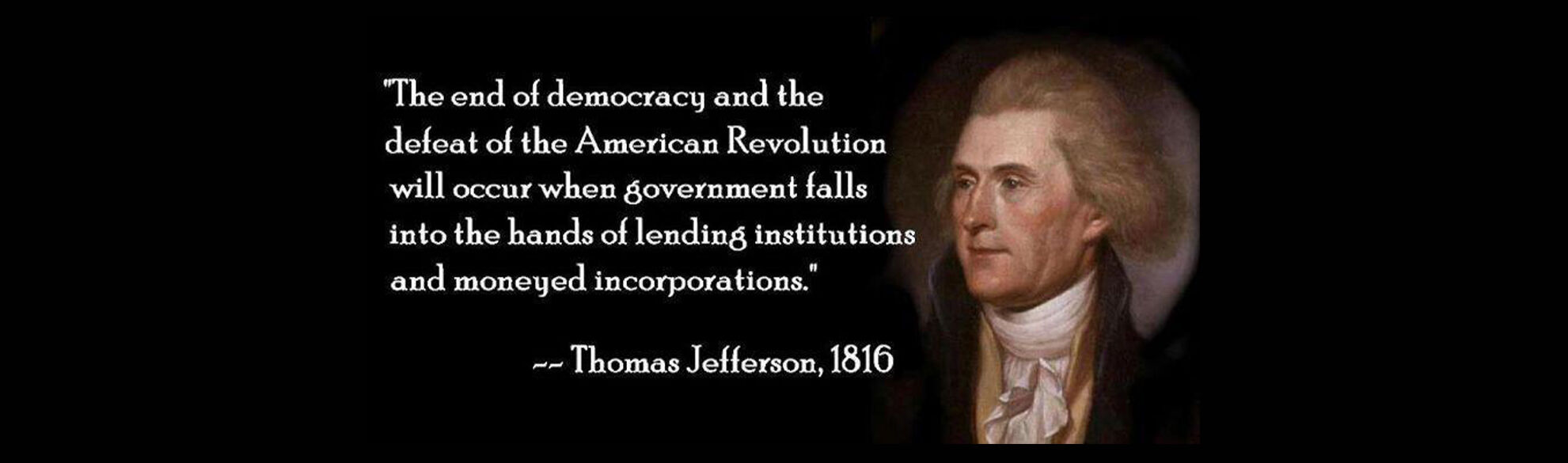
Jefferson understood something that modern democracies often forget: corruption rarely arrives with fanfare. It seeps in quietly, through contracts, consultancies, acquisitions, and “commercial arrangements” that appear harmless until the damage is already done. He feared a moment when governments would no longer distinguish between public duty and private influence, when the machinery of justice could be steered, softened, or neutralised by those with the deepest pockets.
That is precisely what unfolded during the COT arbitrations.
When Ericsson acquired Lane Telecommunications, the Australian Government did not simply allow a conflict of interest; it allowed a foreign corporation to step inside the very mechanism designed to hold it accountable. The takeover was not symbolic; it was operational. The technical expert meant to scrutinise Ericsson’s equipment became, overnight, part of Ericsson’s corporate structure. And yet the arbitrations continued, as though independence were a formality rather than the foundation of justice.
Jefferson’s warning was not about banks alone. It was about power without accountability, wealth without restraint, and governments that forget whom they serve. He feared a world where citizens would stand before institutions that appeared democratic on paper but were hollowed out from within.
For the sixteen COT claimants, that fear became reality.
Just five years ago, Australia’s political class, left and right alike, moved in lockstep with Washington’s worldview. At that moment, the United States stood almost alone on the global stage, carrying the weight of preventing nuclear and biological escalation that could fracture the democratic order it helped build. Whatever one thinks of America’s long catalogue of missteps, and there are many, it is undeniable that for the past eighty, sixty, even forty years, the U.S. has shouldered decisions that were often ugly, often unpopular, yet instrumental in holding together a fragile international stability. And it is this same United States, underestimated as often as it is criticised, that still has the capacity to surprise the world with actions no one sees coming.
Against that backdrop, Australia’s own conduct becomes even more troubling. While the U.S. exposed corruption in global telecommunications markets, including allegations against Sweden’s Ericsson for improper dealings in multiple jurisdictions, the Australian Government quietly allowed Ericsson to infiltrate the very arbitration process designed to scrutinise its conduct.
This breach occurred when Ericsson, through its acquisition of Lane Telecommunications, effectively purchased the principal witness appointed to investigate faults in Ericsson’s own equipment. Instead of halting the process, Canberra allowed the arbitration to proceed as though nothing had changed. The result was a system in which the investigator became the investigated, and the process's integrity collapsed in plain sight.
At the same time, the Government pressed ahead with the sale of Telstra’s critical telecommunications infrastructure, infrastructure already plagued by chronic faults and heavily reliant on ageing Ericsson equipment embedded in exchanges across the country. When the U.S. later revealed the extent of Ericsson’s global misconduct through a detailed list of allegations, it cast a long shadow over Australia’s decision to ignore the warning signs.
The contrast is stark. While the United States publicly confronted corruption in the international telecommunications sector, Australia allowed that same corruption to seep into its own justice mechanisms. It was a failure not just of oversight, but of sovereignty, a moment when a foreign corporation was allowed to shape the outcome of a government‑endorsed arbitration process to which it was a central party.
Click on 'The Ericsson List' image

"One of Telstra's key partners in the building out of their 5G network in Australia is set to fork out over $1.4 billion after the US Department of Justice accused them of bribery and corruption on a massive scale and over a long period of time.
Sweden's telecoms giant Ericsson has agreed to pay more than $1.4 billion following an extensive investigation which saw the Telstra-linked Company 'admitting to a years-long campaign of corruption in five countries to solidify its grip on telecommunications business." https://www.channelnews.com.au/key-telstra-5g-partner-admits-to-bribery-corruption/
To this day, I have never received the critical reports on Ericsson’s exchange equipment that my trusted technical consultant, George Close, meticulously compiled. These documents were fundamental to my case, and their disappearance constitutes a clear violation of the arbitration rules, which require that all submitted materials be returned to the claimant within 6 weeks of the arbitrator’s award
During my arbitration, Lane Telecommunications Pty Ltd was officially appointed as the arbitrator's technical consultant. Lane had access to sensitive materials, including evidence implicating Ericsson-manufactured telephone exchange equipment, the very hardware that plagued my business and other COT claimants' businesses.
Yet, in a move that reeks of collusion, Ericsson quietly acquired Lane while confidentiality agreements were still in effect. This acquisition occurred during the arbitration period, effectively transferring privileged evidence to the very company under scrutiny.
On 16 July 1997, John Pinnock, the official administrator of the arbitrations, wrote to William Hunt and the lawyer for Graham Schorer (COT spokesperson). In that letter, Pinnock warned:
“Lane is presently involved in arbitrations between Telstra and Bova, Dawson, Plowman and Schorer. The change of ownership of Lane is of concern in relation to Lane’s ongoing role in these arbitrations.
“The first area of concern is that some of the equipment under examination in the arbitrations is provided by Ericsson.…
“The second area of concern is that Ericsson has a pecuniary interest in Telstra. Ericsson makes a large percentage of its equipment sales to Telstra which is one of its major clients.
“It is my view that Ericsson’s ownership of Lane puts Lane in a position of potential conflict of interest should it continue to act as Technical Advisor to the Resource Unit. …
“The effect of a potential conflict of interest is that Lane should cease to act as the Technical Advisor with effect from a date shall be determined.” (See File 296-A - )

Evidence File 5 - Testimonials
What is profoundly disturbing about permitting the Lane assessments to remain unchallenged is the troubling sequence of events that followed. The five “litmus-test” COT Cases, currently under Senate scrutiny, didn't just walk away with punitive damages amounting to a staggering $18 million. They were also granted access to a treasure trove of information—over 150,000 pages of previously withheld Ericsson documents. This crucial evidence was utterly inaccessible to the remaining sixteen COT Cases, effectively shutting them out of the critical information that could have bolstered their claims → An Injustice to the remaining 16 Australian citizens
In an additional twist, these fortunate five were even allocated a technical consultant, funded by Telstra and orchestrated under the Senate’s direction, to meticulously analyse and assess the value of the withheld Ericsson documents. This expert support provided them with a significant edge in understanding the complexities of their cases → (GS-CAV Exhibit 258 to 323 - See GS-CAV 296-A)
In jarring contrast, the other sixteen COT Cases were left in the dark. They received no punitive damages, no comparable financial compensation, and were completely denied access to their withheld Freedom of Information documents. This lack of resources left them without a technical consultant to guide them or any assistance to help them navigate their legal battles.
We were essentially abandoned to fight our battles blindfolded, deprived of the very evidence Telstra deliberately concealed, stripped of the expert analysis the Senate itself deemed essential, and denied the critical materials that could have illuminated the vast scale of the challenges we endured.
This was clearly not a mere oversight; it was a two-tiered justice system, meticulously engineered through concealment, blatant conflicts of interest, and institutional bullying that left many without recourse.
From March 9, 1995, when Lane was appointed, until Pinnock’s eventual disclosure, the arbitration process's integrity was compromised. Ericsson’s control of Lane meant that the very entity evaluating our claims was beholden to the supplier of the faulty equipment.
What of those cases, like mine, that concluded in May 1995? At that critical juncture, Arbitration Project Manager John Rundell revealed the truth to the arbitrator, the administrator, and legal counsel: the newly appointed Canadian assessment company was a ruse. Lane would conduct all evaluations related to Ericsson, and the results would be deceptively funnelled into letters bearing the name of DMR Group Pty Ltd, misleading claimants into believing a neutral Canadian expert had reviewed their evidence.
This orchestrated scheme exemplified deep-rooted corruption, betrayal, and manipulation of the arbitration system itself
Even now, in 2025, John Rundell continues to operate arbitration centres in Melbourne and Hong Kong, despite his damning admission in his 18 April 1995 letter:
“Any technical report prepared in draft by Lanes will be signed off and appear on the letter of DMR Inc.” (see Prologue Evidence File No 22-A)
None of the COT Cases was granted leave to appeal their arbitration awards, even though it is now clear that the purchase of Lane by Ericsson must have been in motion months before the arbitrations concluded. It is crucial to highlight the bribery and corruption issues raised by the US Department of Justice against Ericsson of Sweden, as reported in the Australian media on 19 December 2019. → (https://www.channelnews.com.au/key-telstra-5g-partner-admits-to-bribery-corruption/)
To this day, I have never received the critical reports on Ericsson’s exchange equipment, painstakingly compiled by my trusted technical consultant, George Close. These documents were the backbone of my case. Their disappearance is a blatant violation of the arbitration rules, which require all submitted materials to be returned to the claimant within six weeks of the arbitrator’s award.
When my lawyers uncovered disturbing ambiguities in the arbitration agreement, covertly altered after government and COT lawyers had approved the original version, I requested foundational documents from Pinnock to understand how this skulduggery had been allowed. His response?
“I do not propose to provide you with copies of any documents held by this office.” — John Pinnock, 10 January 1996 ()
That marked the beginning of my descent into a dark labyrinth of deceit.
The agreement itself had been secretly altered before I signed it, weaponised to protect Telstra and the arbitration consultants. It shielded Rundell and Lane from accountability, as Chapter 5: Fraudulent Conduct so clearly shows.
A System Engineered to Fail the Truth
What unfolded was not arbitration; it was a coordinated campaign of collusion and concealment. From the laundering of evidence to the secret sale of Lane Telecommunications Pty Ltd, every move was calculated to undermine justice and protect the guilty.
Lane Telecommunications and the Erosion of Justice
The acquisition of Lane Telecommunications Pty Ltd, a consultancy that masqueraded as independent but was ostensibly commissioned by the Telecommunications Industry Ombudsman, reveals a deeply corrupt and treacherous plot at the heart of Australia’s justice system.
This consultancy, which served as the administrator for the Casualties of Telstra (COT) arbitration, was intended to serve the interests of justice by investigating serious claims arising from over 16 cases. These claims pointed directly to the crumbling infrastructure of Ericsson telephone exchanges, with their outdated testing facilities, as the sinister root of persistent and devastating service failures experienced by countless Australians.
What unfolds in this scenario is nothing short of a calculated conspiracy, a carefully orchestrated scheme that undermines the very foundations of democracy. The dark truth is that this operation has largely slipped under the radar, revealing a shocking level of complicity and negligence. The most egregious aspect of this tale is that Lane, a key technical consultancy tasked with assisting the arbitrator in objectively evaluating the claims against Ericsson, was purchased by Ericsson itself during a highly legalistic arbitration process, which the Australian government had endorsed, as a fair process is beyond contempt.
Such a corrupt collusion raises horrifying questions about the integrity of the entire arbitration process. This acquisition isn’t merely unacceptable; it stinks of betrayal, manipulation, and an insatiable thirst for power that puts the principles of fair justice in grave peril. It feels as though a shadowy hand has reached into the very core of the system, undermining it for personal gain and shrouding the quest for truth in darkness.
This wasn’t a breakdown. It was a design, a system built to fail the truth, reward the corrupt, and leave whistleblowers like me stranded in a fog of betrayal.
It is essential that the Ericsson material referenced above be used as part of my ongoing effort to have the Australian Government impartially investigate my claims against Telstra, and, critically, to determine whether Ericsson should ever have been permitted to purchase Lane Telecommunications Pty Ltd during the period Lane was the officially appointed arbitration technical consultant. Lane was not a peripheral contractor; it was the technical expert assigned to the COT arbitrator, who had himself been appointed to assess the COT Cases’ claims against Telstra, including the performance of the Ericsson‑manufactured equipment installed in the telephone exchanges serving our businesses.
The United States Department of Justice’s findings (link) reinforce the COT Cases’ right to demand answers. Why was Ericsson allowed to purchase the principal technical witness investigating claims about Ericsson’s own equipment, equipment that was the central subject of the arbitrations? Why has the Australian Government never called for an explanation as to why the COT Cases were left exposed to a process in which Ericsson could effectively nobble Lane?
I again ask the Australian Government: Why was Ericsson permitted to acquire Lane Telecommunications Pty Ltd during a government‑endorsed arbitration process in which both Telstra and Ericsson were under investigation for knowingly using Ericsson AXE exchange equipment — equipment that other countries were removing, or had already removed, from their networks?
It is abundantly clear that the arbitrator and their advisors engaged in corrupt, deplorable, illegal, illegitimate, illicit, scandalous, senseless, unlawful, and vicious conduct in the delivery of justice to the COT Cases.
For this reason, it is essential to link the bribery and corruption issues raised by the U.S. Department of Justice against Ericsson on 19 December 2019 to the 1996 sale of Lane Telecommunications to Ericsson during the COT arbitrations. These events are inseparable from the poor performance of Ericsson’s AXE telephone exchange equipment, equipment that many countries around the world were removing or had already removed from service (see File 10‑B Evidence File No/10-A to 10-f).
Australia may be the only Western nation that allowed a key arbitration witness, Lane Telecommunications Pty Ltd, to be purchased by the very corporation under investigation. Why did the arbitrator not formally notify the TIO and the Government that Ericsson’s acquisition of Lane during the arbitrations represented a conflict of interest of the highest order? Lane had been investigating Ericsson throughout the arbitrations and was still examining Ericsson’s equipment at the time the sale was being finalised. This was a conflict so severe that it should have halted the process immediately.
The fact that Ericsson was being investigated for supplying known‑deficient equipment to Telstra, equipment already being removed from exchanges overseas, should have triggered special consideration for the COT Cases. At the very least, it should have allowed claimants to appeal their awards if it could be shown that Lane failed to properly evaluate the Ericsson‑related evidence in its reports to the arbitrator.
On 11 November 1994, six months into my arbitration, John Wynack, Director of Investigations at the Commonwealth Ombudsman’s Office, wrote to Telstra CEO Frank Blount. The letter, copied to Dr Hughes (the arbitrator) and Warwick Smith (the administrator), made clear how desperate my situation had become. Wynack stated he would be “very concerned” if my allegations were correct, that Telstra had redacted FOI documents and withheld critical material, including the Portland/Cape Bridgewater Ericsson AXE exchange logbook. His concerns were justified. (See File 114 AS-CAV Exhibit 92 to 127)
That AXE logbook was the key to proving my ongoing telephone faults. Had the arbitrator understood its importance, he could not have issued his findings without including a provision for further compensation until Telstra could demonstrate that no further problems existed within the Ericsson AXE exchange at Portland. The Arbitration Act allowed such a provision.
Why, then, did Lane Telecommunications Pty Ltd not advise the arbitrator of the importance of this AXE logbook? Did Lane fail to disclose its existence because it had been aligned with Ericsson from the moment it was appointed to the arbitration?
Next Page ⟶