Chapter 7- Vietnam-Viet-Cong-2
I’d like to share some thoughts on the Australian government's actions regarding trade with China during that period. It’s clear that while the intention to halt starvation was vital, there seemed to be a lack of thorough consideration of all the factors involved. A more proactive approach could have included ensuring that humanitarian aid, as part of the sale contract, was protected from being resold.
Additionally, it’s important to recognise the significant injustices faced by our soldiers and those of our allies. Acknowledging these past missteps could help us make more informed decisions in the future.
I deeply respect our returning soldiers for their courage and dedication, and I believe there are always opportunities to better support them and learn from their experiences to foster a more just and empathetic approach moving forward.
The People's Republic of China
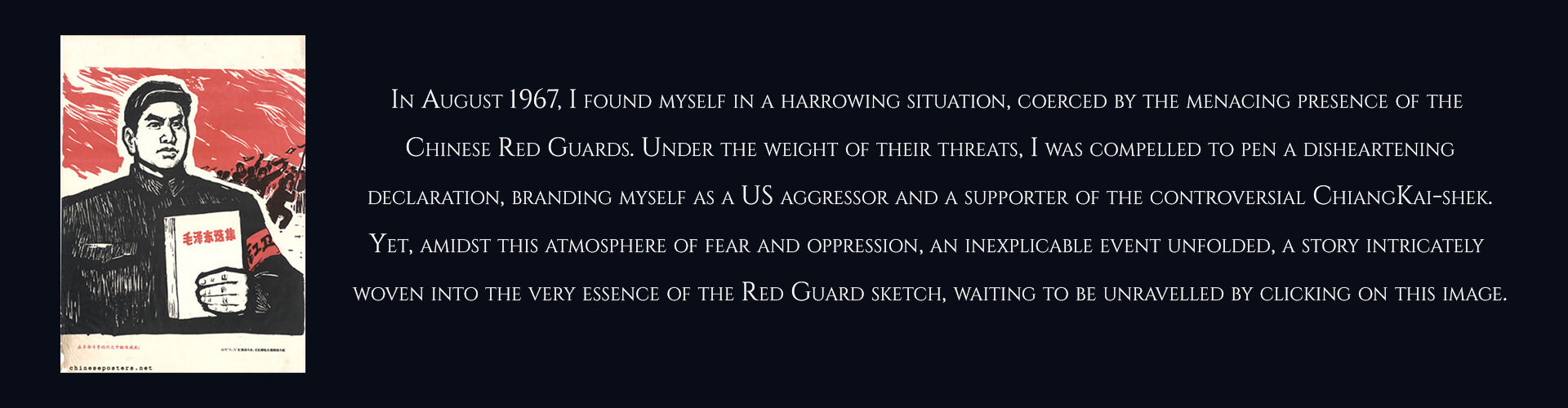
Murdered for Mao: The killings China ‘forgot’
The Letter, the Truth, and the Waiting
In August 1967, I found myself in a situation so precarious, so surreal, that it would etch itself into the marrow of my memory. I was aboard a cargo ship docked in China, surrounded by Red Guards stationed on board twenty-four hours a day, spaced no more than thirty paces apart. After being coerced into writing a confession—declaring myself a U.S. aggressor and a supporter of Chiang Kai-shek, the Nationalist leader in Taiwan—I was told by the second steward, who handled the ship’s correspondence, that I had about two days before a response to my letter might reach me. That response, whatever it might be, would be delivered by the head of the Red Guards himself.
It was the second steward who quietly suggested I write to my parents. I did. I poured myself into 22 foolscap pages, writing with the urgency of a man who believed he might not live to see the end of the week. I told my church-going parents that I was not the saintly 18-year-old they believed I was. I confessed that the woman they had so often thanked in their letters—believing her to be my landlady or carer—was in fact my lover. She was 42. I was 18 when we met. From 1963 to 1967, she had been my anchor, my warmth, my truth. I wrote about my life at sea, about the chaos and the camaraderie, about the loneliness and the longing. I wrote because I needed them to know who I really was, in case I was executed before I ever saw them again.
As the ship’s cook and duty mess room steward, I had a front-row seat to the daily rhythms of life on board. I often watched the crew eat their meals on deck, plates balanced on the handrails that lined the ship. We were carrying grain to China on humanitarian grounds, and yet, the irony was unbearable—food was being wasted while the people we were meant to help were starving. Sausages, half-eaten steaks, baked potatoes—they’d slip from plates and tumble into the sea. But there were no seagulls to swoop down and claim them. They’d been eaten too. The food floated aimlessly, untouched even by fish, which had grown scarce in the harbour. Starvation wasn’t a concept. It was a presence. It was in the eyes of the Red Guards who watched us eat. It was in the silence that followed every wasted bite.
A Tray of Leftovers and a Silent Exchange
After my arrest, I was placed under house arrest aboard the ship. One day, I took a small metal tray from the galley and filled it—not with scraps, but with decent leftovers. Food that would have gone into the stockpot or been turned into dry hash cakes. I walked it out to the deck, placed it on one of the long benches, patted my stomach as if I’d eaten my fill, and walked away without a word.
Ten minutes later, I returned. The tray had been licked clean.
At the next meal, I did it again—this time with enough food for three or four Red Guards. I placed the tray on the bench and left. No words. No eye contact. Just food. I repeated this quiet ritual for two more days, all while waiting for the response to my letter. During that time, something shifted. The Red Guard, who had been waking me every hour to check if I was sleeping, stopped coming. The tension in the air thinned, just slightly. And I kept bringing food—whenever the crew was busy unloading wheat with grappling hooks wrapped in chicken wire, I’d slip out with another tray.
To this day, I don’t know what saved me. It was certainly not the letter declaring myself a U.S. aggressor and a supporter of Chiang Kai-shek, the Nationalist leader in Taiwan. Maybe it was luck. Or perhaps it was that tray of food, offered without expectation, without speech, without condition. A silent gesture that said, “I see you. I know you’re hungry. I know you’re human.”
And maybe, just maybe, that was enough.
In essence, the Australian government traded the lives of its soldiers engaged in the conflict in North Vietnam against the desperate need to provide sustenance for an entire nation teetering on the brink of starvation.
Footnote 83, 84 and 169 → in a paper submitted by Tianxiao Zhu to - The Faculty of the University of Minnesota titled Secret Trails: FOOD AND TRADE IN LATE MAOIST CHINA, 1960-1978, etc → Requirements For The Degree Of Doctor Of Philosophy - Christopher M Isett June 2021
Tianxiao Zhu's Footnotes 83, 84, 169:
In September 1967, a group of British merchant seamen quit their ship, the Hope Peak, in Sydney and flew back to London. They told the press in London that they quit the job because of the humiliating experiences to which they were subjected while in Chinese ports. They also claimed that grain shipped from Australia to China was being sent straight on to North Vietnam. One of them said, “I have watched grain going off our ship on conveyor belts and straight into bags stamped North Vietnam. Our ship was being used to take grain from Australia to feed the North Vietnamese. It’s disgusting.”
84. The Minister of Trade and Industry received an inquiry about the truth of the story in Parliament, to which the Minister pointed out that when they left Australia, the seamen only told the Australian press that they suffered such intolerable maltreatment in various Chinese ports that they were fearful about going back. But after they arrived in London, Vietnam was added to their story. Thus the Minister claimed that he did not know the facts and did not want to challenge this story, but it seemed to him that their claims about Vietnam seemed to be an “afterthought.”
169. "...In Vancouver, nine sailors refused to work on a grain ship headed to China: two of them eventually returned to work, and the others were arrested. Just when the ship was about to sail, seven more left the ship but three of them later returned to work. In Sydney, six Canadian sailors left their ship; they resigned and asked to be paid, but the Australian immigration office repatriated them. At that time, a grain ship usually had crew members of about 40 people. A British ship lost the Chief Officer and sixteen seamen, who told journalists that if the ship were going to the communist countries, they would rather go to jail than work on the ship."
The Canadian Government and Its Moral Code of Ethics
Portland Memorial Vietnam Peace Park

Please visit → https://shorturl.at/aejRT
By courtesy of Yu Xiangzhen, May 2019 → https://shorturl.at/kRTUW
"On May 16, 1966, I was practicing calligraphy with my 37 classmates when a high-pitched voice came from the school’s loudspeaker, announcing the central government’s decision to start what it called a “Cultural Revolution.”
It was my first year of junior high, I was just 13.
“Fellow students, we must closely follow Chairman Mao,” the speaker bellowed. “Get out of the classroom! Devote yourselves to the Cultural Revolution!”
Two boys rushed out of door, heading to the playground yelling something.
I left more slowly, holding hands with my best friend Haiyun as we followed everyone else outside.
It would be my last normal day of school."
FOOD AND TRADE IN LATE MAOIST CHINA, 1960-1978
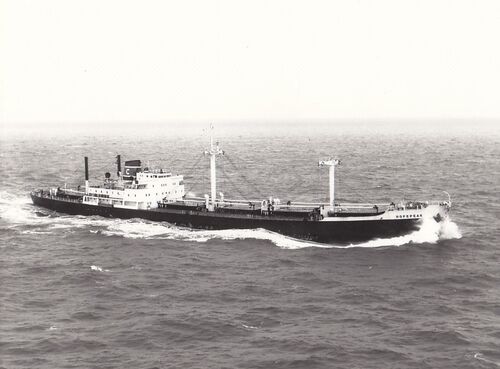
In January 2024, for the second or third time since 2021, I reread Tianxiao Zhu's paper, "Food and Trade in Late Maoist China, 1960–1978." Between Footnotes 82 and 85, Zhu not only names the ship Hopepeak, on which I served from June 28 to September 18, 1967 (refer to British Seaman's Record R744269 -Open Letter to PM File No 1 Alan Smith's Seaman. →Chapter 7- Vietnam-Vietcong-2), but also recounts the events as they truly happened (I was there), rather than the version presented by the Australian government in 1967.
Sir John McEwen, the Australian Minister of Trade and Industry, whom Tianxiao Zhu quotes as stating that the British seafarers of the Hopepeak feared returning to China, presented this fear as a mere afterthought once the crew had been flown from Sydney back to England. However, McEwen, knowing full well this was not the case, deliberately withheld from the Australian public and later the British media that the Commonwealth Police (now the AFP) had met the ship upon its arrival in Sydney. This police presence was prompted by radio reports detailing what had happened to some of the crew — including me — who had been frog-marched up and down the wharves in China under the accusation of being a USA sympathiser and spy.
Those British seamen had witnessed me being frog-marched off the Hopepeak under armed guard on two occasions, believing I would never be seen again. My reappearance, however, was due to the fact that my life was deemed more valuable than the 13,600 tons of wheat still awaiting loading onto the Hopepeak in Australia for its return voyage to the People's Republic of China. The British seamen had good reason to fear that return voyage on the Hopepeak.
Interestingly, after the crew was flown back to England (I remained in Sydney), a new crew was flown out at the shipowner's expense. Had the original crew not proven they had good reason to fear returning to Communist China, the shipowner would not have borne the cost of flying two crews.
Indeed, if the skipper had not reported my experience and that of another Hopepeak crew member at the hands of the Chinese Red Guards during the ship's return journey to Sydney, the Commonwealth Police (now the Australian Federal Police) would not have been waiting on the dockside to interview us upon our arrival on September 18, 1967.
Both the police and the media wanted to know why so many crew members feared returning to Red China. A ship's entire crew refusing to sail to a specific destination is unheard of. This refusal to sail was no afterthought. Indeed, if the events were untrue, why did the Commonwealth Police and media meet the ship? The captain and shipowner must have notified them that all was not well even before the vessel had berthed.
What Tianxiao Zhu does not mention in the footnotes is that the Australian Trade Minister misled many people about the seriousness of what had taken place, so that the Australian government could continue to sell wheat to Red China.
Likewise, the Commonwealth Police asked me to describe the circumstances under which I was forced to write under threat of being shot. They would not have done this without official acknowledgment from the ship's captain that these events had occurred. Why was I escorted off the Hopepeak under armed guard by the Red Guards and taken to the hospital? I was told I had syphilis, which I knew was highly unlikely, and when I refused an injection with an unsterilised needle, I caused a scene at the hospital.
Refusing any demand by the Red Guards in the People's Republic of China in 1967 was not a decision one took lightly.
I was placed under armed guard for several days and regularly threatened, as was another crew member who had resisted being stopped and forced to recite verses from Mao's Red Bible. The ship's officers helped me compile two letters, one addressed to Mao and the other to the People's Republic of China. In those letters, I apologised for causing a problem at the hospital and for my treatment of the Red Guards.
What the two ship's officers had written differed from what the Red Guards wanted to convey in those letters. A third letter was then written under pressure from the Red Guards, stating: "I am a US aggressor and a supporter of Chiang Kai‑shek and the Chinese Nationalist Party." When I told the skipper that writing this statement meant I was signing my death warrant—as Chiang Kai‑shek was against Mao Tse‑tung—the Second Steward, in charge of the ship's correspondence, insisted I would be dead if I refused.
At the Second Steward's suggestion, I wrote, "I disliked America and its invasion of North Vietnam," as he stated it would be more potent. It was agreed that I would hand‑deliver this letter to the armed guards as a show of respect, fearful for my life.
Before leaving the ship with this letter, the Third Officer on the Hopepeak, who was from Mauritius, pulled me aside and informed me that the cargo being unloaded had already been paid for by the People's Republic of China. A further load of similar wheat still in Australia had also been paid for, and that money was being held in transit until the Hopepeak returned with the next shipment.
The Third Officer made it explicitly clear to the Chinese Commander that if I were shot, there would be no further wheat sent to Red China, and the fight over what had already been supplied would be arbitrated, with the shipowners winning on appeal because they had fulfilled their part of the deal. This threat worked, and I returned from delivering this letter in a daze.
After arriving in Sydney on 17 September 1967, I provided these details to the Commonwealth Police and to a newspaper journalist whom the ship's agent had contacted.
While the ship was in China, a loud voice was audible twenty-four hours a day from speakers attached to quayside floodlight poles, allowing the wharf labourers to work through the night. The voice, speaking in English (not Chinese), made propaganda statements about British imperialism. The constant drone of these propaganda recordings was unnerving. A sentry box stood at the bottom of the ship's gangway, where a Red Guard—sometimes two—stood to check the credentials of everyone boarding or leaving the ship. The ship's crew, from officers down, were told they could have shore leave, but only to visit the Seaman's Mission and a shop selling trinkets and large bottles of Chinese-made beer.
No fishing lines were allowed over the side of the ship. Some of the ship's crew were treated differently from others. For unknown reasons, our crew was being treated harshly. Rumours suggested that two young Chinese girls had been seen on a sister ship and shot as prostitutes. Their bodies, no longer belonging to the People's Republic of China, were left with the Hopepeak's sister ship. While these were only rumours, this may have been why our ship was singled out.
When I found out who Australia's Minister of the Army was, I wrote to the Minister, Malcolm Fraser, asking him to ensure Australia refrained from sending more grain to Red China on the Hopepeak with a new crew. The ship nevertheless left for Communist China, carrying 13,600 tons of wheat, despite my pleas. Australia will, of course, never find out how much of that wheat went into the bellies of the North Vietnamese soldiers/guerrillas before they marched off into the jungles of Vietnam in search of Australian, New Zealand, and U.S. blood.
John McEwen could not allow the Australian public to witness the stand taken by the crew of a British ship. The crew declared, "We are not going to be a party to the slaughter of those conscripts that the Australian government forced to forfeit their lives for a few bowls of grain." This is precisely what the crew of the Hopepeak did: they put their seaman's discharge books on the line, knowing some might not be allowed to sail again. An investigation would be required to prove their sound judgment for refusing to transport cargo to Red China, cargo they knew was being redeployed to North Vietnam. For a seaman, a discharge book stamped "Voyage Not Completed" meant that some shipping companies would refuse to employ them. Sir John McEwen (Australia's Trade Minister) subsequently turned these British seamen's brave actions into something sordid.
File Number 114 ⇒ is a letter dated November 11, 1994, from John Wynack, Director of Investigations at the Commonwealth Ombudsman's Office, to Frank Blount, Telstra's CEO. The letter reveals my increasing desperation. In it, Mr. Wynack made it clear to Mr. Blount that he would be significantly concerned if my allegations proved correct: specifically, that Telstra had deliberately redacted information from documents previously supplied under FOI, and had withheld relevant documents discussing my conversation with the former Prime Minister of Australia. What information had Telstra deleted from this discussion?
I had alerted Mr. Fraser to my concern that the government was concealing its knowledge of wrongdoing regarding the redeployment of grain to North Vietnam—grain intended to feed an enemy that Australia, New Zealand, and the U.S. were fighting.
I reiterate: how could a country like Australia sell its produce (wheat) to Communist China on humanitarian grounds when Communist China was redeploying some of that wheat to another Communist country, North Vietnam, an enemy of Australia? This same enemy was killing and maiming young Australian lives, as well as the young lives of Australia's allies, New Zealand and the U.S.—young lives (mostly conscripts) who were never to see their homeland again.
I ask every visitor to this website to read pages 82-85 of the footnotes in the paper Food and Trade in Late Maoist China, 1960–1978, prepared by Tianxiao Zhu. This paper discusses the Hopepeak ship I was on between June and September 1967, which traveled to Communist China during the Vietnam War.
I have mentioned some tough memories from my short stay in China, including witnessing some pretty horrific scenes. Understandably, these experiences have stayed with me and affected my sleep until recently, when I started writing about them. We must acknowledge and address these kinds of events, so I wanted to share a resource with you — a first‑hand account from a Chinese girl who witnessed similar events. You can find it at the link https://shorturl.at/ltv89. It's frustrating when those in positions of power try to downplay or deny what's happening, as John McEwen did. We must hold our leaders accountable for their actions and their words. In this case, I think it's only right that the Australian government apologise to those who were dismissed as liars by McEwen.
Confronting uncomfortable truths is never easy, but it is necessary to move forward. Crucially, thanks to the unwavering support of the British seamen who stood by me and refused to return to China, my British Seaman's book received a clean discharge. This allowed me to continue working on British‑manned ships in Australia and Britain, despite John McEwen's disregard for the welfare of others.
Please read Chapters 1 to 12 below and learn how my China episode affected my life even after I purchased the Cape Bridgewater Holiday Camp in February 1988.