Chapter 1 - Can We Fix The CAN
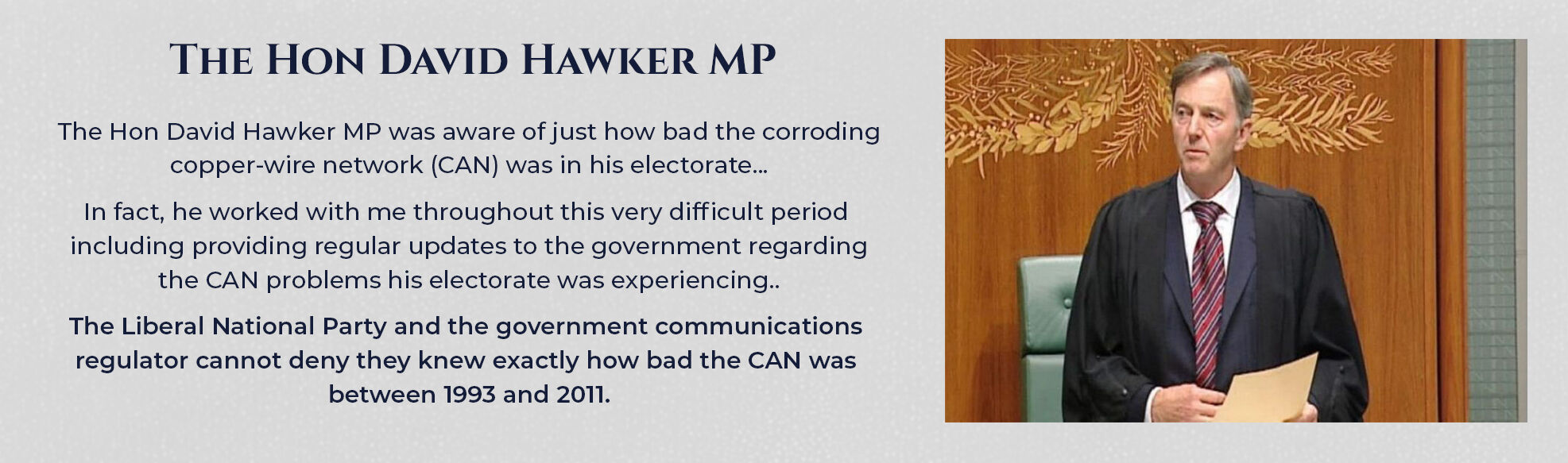
(see [document|1532] does not exist and [document|1533] does not exist)
The letters attached to Chapter 1 - Can We Fix The CAN, dated April 8 and 9, 1994, from Telstra’s group general manager to AUSTEL’s chair, demonstrate that AUSTEL (now ACMA) was not truly independent. Instead, it shows that AUSTEL could be influenced to modify their official findings in the COT report, as Telstra requested in several points in this initial letter to AUSTEL/ACMA. For example, Telstra writes:
“The Report, when commenting on the number of customers with COT-type problems, refers to a research study undertaken by Telecom at Austel’s request. The Report extrapolates from those results and infers that the number of customers so affected could be as high as 120 000. … (See Open Letter File No/11)
And the next day:
“In relation to point 4, you have agreed to withdraw the reference in the Report to the potential existence of 120,000 COT-type customers and replace it with a reference to the potential existence of “some hundreds” of COT-type customers” (See Open Letter File No/11)
Point 2.71 in AUSTEL’s April 1994 formal report notes:
“the number of Telecom customers experiencing COT type service difficulties and faults is substantially higher than Telecom’s original estimate of 50”.
It is nothing short of a treacherous betrayal for a government regulator to so drastically alter its findings, slashing the number of reported COT‑type complaints from an astonishing 120,000 to a mere 50 or so. Such a flagrant misrepresentation constitutes a deep and sinister deception, undermining the public trust it claims to serve. The fact that Rupert Murdoch and FOX were rewarded amid these glaring Telstra telecommunications failures reveals disturbing collusion that cost Australian citizens dearly, driving some into bankruptcy and into numerous court cases, all because of lies perpetuated by government bureaucrats. This manipulation not only defrauds the people, but it also casts a long shadow over the integrity of those in power.
The fact that Robin Davey, Chairman of AUSTEL, and John MacMahon, General Manager of Consumer Affairs, were in receipt of these letters on the very same three days that I and eight other COT Cases were working with AUSTEL on their COT Cases April 1994 public‑released report, while that report was being secretly altered without our approval or input, raises the most serious questions about why the public was being deceived. It is yet another example of the government bureaucratic lies that crippled the COT Cases arbitrations.
As you delve deeper into this narrative, you will uncover how Telstra’s highly compensated legal team engaged in a disturbing pattern of lies, coercion, intimidation, and evidence tampering. These actions aimed to shield a deteriorating, government‑owned Telstra Corporation from accountability and scrutiny, revealing the depths some will go to protect corporate interests at the expense of public welfare.
The Briefcase Saga
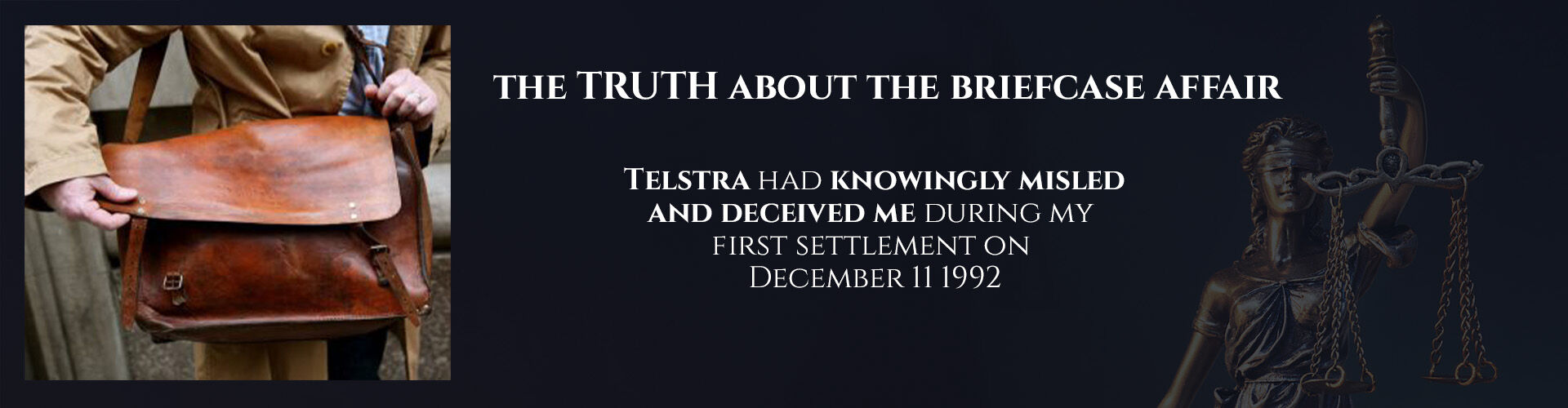
[document|1532] does not exist and [document|1533] does not exist)
It is important to return to 3 June 1993: the day two Telstra senior technical consultants inadvertently left a briefcase at my premises (see Can We Fix The Can - Copper-Wire Network).
The essential documents in that briefcase provided evidence of Telstra's settlement with me in December 1992. Handwritten notes stating my phone problems had been continuing for months were part of this damning evidence. Most importantly, this evidence proved Telstra knew major faults still existed in its network when it commercially settled with me, telling me the problem had lasted sixteen days when it confirmed the faults had existed unabated for more than eighteen months. This evidence prompted AUSTEL to run a series of surveys around Australia.
Those surveys showed more than 120,000 Telstra customers were complaining of similar ongoing COT-type complaints.
The documents exposed Telstra was fully aware its inadequate service and major communication problems affected the viability of my business endeavours and other businesses throughout Telstra’s network. Official Senate estimate committee Hansard records show Senator Richard Alston, the then Shadow Minister for Communications, discussing the Problem 1 document on 25 February 1994 during a hearing.
Another previously unseen document, dated 24 July 1992 and provided to Senator Richard Alston in August 1993, includes my phone number and refers to my complaint that callers to my number receive an RVA service-disconnected message. A further document, dated 27 July 1992, discusses problems experienced by potential clients who tried to contact me from Station Pier in Melbourne. Some of these handwritten records go back to October 1991 and many of them were fault complaints that I did not record myself. Telstra, however, has never explained who authorised the withholding of my name from those who complained to Telstra. If I had known who was unable to contact me, I could have provided an alternate contact number for future reference.
And even more interesting, just like the Pulp Fiction movie: What was in the briefcase? This briefcase also contained alarming documents that make this COT story even more bizarre.
On 27 August 1993, Telstra’s corporate secretary wrote to me about the same ‘briefcase’ documents, noting:
“Although there is nothing in these documents to cause Telecom any concern in respect of your case, the documents remain Telecom’s property and therefore are confidential to us. …
“I would also ask that you do not make this material available to anyone else.” (See Open Letter File No/2)
Telstra’s FOI document, dated 23 August 1993, and labelled folio R09830 with the subject listed as The Briefcase, is alarming, to say the least. This document, which was copied to Telstra’s corporate secretary, notes:
“Subsequently it was realised that the other papers could be significant and these were faxed to Craig Downing but appear not to have been supplied to Austel at this point.
“The loose papers on retrofit could be sensitive and copies of all papers have been sent to Ross Marshall.” (Arbitrator File No 62)
The sensitive papers referred to above dated 23 August 1993, of which Telstra’s corporate secretary claimed, “nothing in these documents to cause Telecom any concern in respect of your case”, actually provided clear evidence that Telstra’s management concealed from me and AUSTEL (now ACMA), the actual state the network in Cape Bridgewater.
Next Page ⟶