The first remedy pursued
PART ONE
In December 1996, on the advice of my pending Arbitration Appeal lawyers, Law Partners of Melbourne, I approached Laurie James, President of the Institute of Arbitrators Australia, with a heavy heart and a desperate need for truth. I laid out my grievance plainly: the arbitration process had veered far outside the boundaries of the agreed‑upon Arbitration Procedure. I told him the arbitrator, Dr Gordon Hughes, had surrendered all control over the proceedings, leaving the integrity of the process in ruins. I did not soften my words. I expected honesty to matter. I expected the system to care.
Instead, I hit a wall, solid, rehearsed, and impenetrable. John Rundell. John Pinnock. Dr Hughes himself.
All three dismissed my claims without hesitation. Their response was swift, unified, and disturbingly coordinated. They closed ranks to protect the process, not the truth. They deliberately misled Laurie James, fully aware of the deception they were constructing.
And then, twenty‑seven months later, the façade finally cracked. John Pinnock sat before a Senate committee, stripped of the comfort of closed‑door protection, and admitted what they had all denied for years: the arbitrator had been entirely powerless because the arbitration was conducted outside the established procedures. His words echoed the truth I had been voicing since 1994, a truth that had cost me years of struggle, frustration, and damage to my family’s name.
Let me say this plainly: if those three men had chosen honesty in 1996, if they had simply told the Senate, “Yes, this claimant is right; the process was outside the rules, and the arbitrator had no control” — everything could have been different. The Senate could have acted. The truth could have surfaced. The damage could have been contained. I would not still be here, twenty‑seven years later, dragging this burden of injustice behind me like a chain that refuses to break.
But they did not choose courage. They chose self‑preservation. They shielded themselves. They shielded Telstra. They shielded a system that was never designed to withstand scrutiny.
The arbitration system, supposedly a pillar of justice, revealed its true nature. It wasn’t justice. It wasn’t even close. It was a self‑serving machine that preferred to crush a citizen rather than confront its own failings. A system that hid behind procedural language while ignoring the very rules it claimed to uphold. A structure that rewarded silence, punished truth, and dared to call the whole sordid affair “due process.”
Twenty months after this contact, and still with no response from the administrator of my arbitration, John Pinnock, I was forced to continue my search for the documents I had been promised. With the help of the Commonwealth Ombudsman’s Office — the only regulatory agency in Australia not compromised by Telstra’s influence or entangled through shared board memberships- I persisted in my efforts to obtain the arbitration material that all parties had assured me I would receive if I abandoned my then‑active Fast Track Settlement Proposal (FTSP).
Those assurances were hollow.
Between 18 October 1995 and 4 October 1997, with the assistance of Mr John Wynack, Director of Investigations for the Commonwealth Ombudsman, I sought, under the Freedom of Information Act, a copy of Telstra’s arbitration file, the file that would have shown who had been involved in stopping me at all costs from proving my claims, and why only AUSTEL received a copy of the Portland/Cape Bridgewater report while my arbitration team did not. Home Page File No/82 confirms Mr Wynack did not believe Telstra’s claim that it destroyed the file.
No meaningful documents arrived. No promised transparency materialised. Nothing of substance was provided until October 1997, a staggering thirty months after my arbitration concluded on 11 May 1995. By then, the damage was done. The delay was not accidental. It was strategic. It was obstructive. And it was part of a broader pattern of treachery designed to ensure I could never present a complete case, never expose the misconduct, and never challenge the corrupted process that had already sealed my fate.
In response to my repeated requests for these essential arbitration records, John Pinnock composed a letter dated 10 January 1996. In that letter, he outlined his position regarding the requested documents, a position that further complicated, obstructed, and undermined my efforts to access the information I needed for my appeal.
“I refer to your letter of 31 December 1996 in which you seek to access to various correspondence held by the TIO concerning the Fast Track Arbitration Procedure. …
“I do not propose to provide you with copies of any documents held by this office.” (See Open Letter File No 57-C)
On 26 September 1997, Telecommunications Industry Ombudsman John Pinnock formally addressed a Senate estimates committee (see page 99, COMMONWEALTH OF AUSTRALIA - Parliament of Australia and Prologue Evidence File No 22-D). He stated:
“Firstly, and perhaps most significantly, the arbitrator had no control over that process, because it was a process conducted entirely outside the ambit of the arbitration procedures.”
There is no amendment, none, to any agreement signed by the first four COT members that allowed the arbitrator to conduct our arbitrations outside the agreed procedure. No clause states he would have no control once we signed. So how can the arbitrator and the TIO continue to hide behind a confidentiality clause when the agreement itself never authorised the very conditions that stripped the arbitrator of control?
When this fresh evidence surfaced, showing that Pinnock had already warned the Senate in 1997 that the arbitrator had no control because the process was conducted entirely outside the agreed procedure, that admission alone should have triggered a full, transparent inquiry.
My family name, my reputation as the owner of a respected school‑holiday camp, and the legitimacy of my claims should have been enough for the government, the same government that endorsed the process, to demand answers from Dr Hughes. Instead, nothing happened. No inquiry. No accountability. No honesty.
And yet the truth was sitting there in the Senate record all along. Pinnock’s admission confirmed everything I had been saying from the beginning. It proved the process wasn’t just flawed; it was fundamentally invalid.
This failure didn’t just harm me. It misled and deceived Laurie James, who intended to investigate my claims. He was entitled to the truth. Instead, he was handed a carefully crafted falsehood, one that protected the officials involved and left my family and me to bear the consequences.
At the very least, I should have received a written apology from the arbitration administrator. Not as a courtesy, but as a basic act of decency. My family deserved that acknowledgement. I deserved it. And the Senate Hansard of 26 September 1997 proves that my claims were true, correct, and justified from the start.
There was never any ambiguity. The only ambiguity was the one manufactured by those who feared the truth.
The truth was not lost. It was taken. And the fight to reclaim it continues.
If there is any uncertainty about whether John Rundell or his office, as Project Managers, withheld crucial information from the arbitration process that could have positively impacted my case, the concerned individual or organisation can refer to "Absent Justice Part 2 - Chapter 14 - Was it Legal or Illegal?", where combining the five links provided directly below and marrying all six pages they will find that my claims are valid.
Regarding the actions of the Arbitration Project Managers, their behaviour can only be viewed as gross misconduct for concealing the five relevant 008/1800 letters exchanged with AUSTEL, Telstra, and the Arbitrator, Dr Gordon Hughes.
PART TWO
The Letter to Laurie James and the Disputed Documentary Record
John Rundell, now a prominent Hong Kong arbitrator, has a history in Australia of providing the Telecommunications Industry Ombudsman with false and misleading information about arbitration claims that deviated from agreed-upon procedures. In Australia, he helped legitimise flawed and compromised arbitrations. The critical question now is whether he will repeat this conduct in Hong Kong, or whether he has already done so. Furthermore, there is concern that Artificial Intelligence tools might be covertly used in Hong Kong arbitration centres to validate similar procedural fraud, masked as "efficiency" and "modernisation," thereby undermining justice.
For more details, visit absentjustice.com. As Project Manager for several arbitrations, Rundell admitted to the Telecommunications Industry Ombudsman that his formal financial report on my claim was incomplete, stating:
"...I did advise Mr Ryan (my arbitration financial accountant) that the final report did not cover all material and working papers."
This admission alone reveals a deliberate, calculated failure to provide a comprehensive, honest assessment, betraying the very claim the report was meant to evaluate.
The corruption extended beyond incomplete reports. In January 1996, after I presented undeniable evidence of missing documents, systemic manipulation of my arbitration, and a deceptive agreement used to seal our fate, I anticipated a transparent review. Instead, I faced a sinister and calculated character assassination. The focus was deliberately shifted to a fabricated allegation: that I had called arbitrator Dr Gordon Hughes's home at 2:00 a.m., impersonating a member of the Resource Unit to terrorise his wife.
I have always vehemently denied making that 2:00 a.m. call and have never admitted to it. Nevertheless, this toxic falsehood was inserted into official channels to prejudice Laurie James, then President of the Institute of Arbitrators Australia, effectively destroying my credibility before my substantive complaints could be heard.
On February 27, 1996, John Pinnock, the second-appointed Telecommunications Industry Ombudsman, made a devastating and authoritative claim in writing:
"Mr Smith has admitted to me in writing that last year he rang Dr Hughes' home phone number (apparently in the middle of the night, at approximately 2.00 am) and spoke to Dr Hughes' wife, impersonating a member of the Resource Unit."
This statement highlights a critical absence: the alleged written admission it claims to rely on. I have been denied access to this supposed document for over thirty years. Without a shred of evidence, the system accepted this manufactured lie as truth. The timing was precise. I had exposed structural flaws in the arbitration, including withheld FOI data and compromised agreements. Instead of addressing their corporate misconduct, they deployed an insidious personal smear to bury the evidence and protect those responsible.
To make the trap inescapable, they introduced further clandestine correspondence. Dr. Hughes secretly appended material from John Rundell, concerning a supposed police inquiry into criminal damage, to his letters to Laurie James. Compounding this corruption, Dr. Hughes explicitly ordered that I be completely excluded from this highly prejudicial third-party correspondence. This was not an error; it was a deliberate cover-up. By providing unverified, defamatory dossiers to the Institute's President while enforcing total secrecy on me, they successfully portrayed me as a volatile and threatening complainant. They not only protected Telstra but actively perverted the legal process to prevent systemic abuses of procedural fairness from coming to light.
The corruption is further evident in the blatant fraud within the documentary record itself. Dr Hughes claimed to Laurie James that he and his consultants had meticulously reviewed my 24,000 evidence documents. However, the official paper trail exposes a scandalous deception:
-
A formal technical evaluation report dated April 30, 1995, indicates that consultants had examined only approximately 4,000 pages.
-
Dr. Hughes's final award, issued on May 11, 1995, states he reviewed just over 6,000 pages of documentary evidence.
The remaining 18,000 critical FOI documents were deliberately withheld until after Telstra submitted its formal defence, making it impossible for me to use evidence of its failing network to protect my business. This was not a clerical discrepancy; it was a calculated mathematical deception. If the arbitrator based his ruling on 6,000 pages while boasting to the Institute's President that 24,000 pages were accounted for, where did the missing 18,000 pages go? Who purged the record? The conclusion is unavoidable: they suppressed significant, damaging evidence of network failure and denied me the legal right to a fair hearing.
This institutional treachery was finally confirmed on November 23, 2007—twelve years after the arbitration concluded. The findings revealed that government regulators had already identified, validated, and documented the exact network faults I complained about before pressuring me into signing the arbitration agreement. They knew the network was failing and that their lines were systematically harming my business. Yet, they concealed their own findings, forced me into a rigged 13-month kangaroo court, and silently watched as I spent hundreds of thousands of dollars proving a truth they had already suppressed.
The consequences were devastating. My partner Cathy and I were left defenceless, struggling to save a dying business while a corrupt corporate entity and compromised officials systematically erased our evidence. This engineered betrayal achieved its intended goal: it destroyed our business, ruined our livelihoods, and inflicted profound personal and financial trauma that has lasted for over three decades.
We do not ask for blind belief. We demand a forensic examination of the unadulterated chronology. An independent criminal investigation must examine the correspondence to Laurie James, the altered technical reports, the hidden FOI releases, the fabricated late-night phone call, and the incomplete financial reporting overseen by John Rundell.
We must definitively establish:
-
The precise origin of the fabricated 2:00 a.m. phone call allegation.
-
The full details of the fictitious written admission John Pinnock claims exists.
-
The disappearance of 18,000 evidence pages from the arbitrator's final assessment.
-
The identities of the officials who authorised the withholding of the 1994 regulatory validation findings.
This is no longer a private commercial grievance. It is a matter of public interest—a documented forensic archive of institutional fraud and corruption that shattered innocent lives to protect a corporate privatisation prospectus and the reputations of those who served it. As AI becomes more integrated into arbitration and mediation procedures worldwide, the danger is clear: if we do not expose this corruption, AI will not correct the past.
It will encode it—and automate injustice for generations to come.
PART THREE
Early in the COT story, visitors must face a harsh reality: the corruption surrounding our arbitrations didn't exist in isolation. It was intertwined with one of the darkest scandals ever to affect the Australian Parliament.
COT Case Ann Garms — whose YouTube video is available on KPMG featuring Ex‑Partner John Rundell — wrote multiple letters to The Hon Malcolm Turnbull and Senator Bryce (see Evidence File Seven). These letters revealed that Senator Bob Collins, the Minister for Communications overseeing our four arbitrations, was under investigation by the Australian Federal Police for child rape within Parliament House, Canberra. These were not mere rumours; they were documented, formally raised allegations known within government circles while our arbitrations were taking place.
The consequences were devastating. Because Collins, then Minister for Communications, was under investigation, we did not receive numerous government‑related Freedom of Information (FOI) documents connected to him and his telecommunications portfolio, documents we COT Cases needed to understand what he and his government knew about our telephone issues, which were about to be arbitrated. Evidence that should have supported the COT Cases was locked away, buried during a paedophile investigation by the AFP that had nothing to do with our four arbitrations, although the AFP were investigating Telstra during those same arbitrations for the unauthorised interception of our telephone and fax services provided by Telstra — an issue Senator Bob Collins was also interested in.
The whole government‑endorsed COT arbitrations were intertwined with tentacles festering within the system of government, which could not afford to let the media expose what we COT Cases had ploughed our arbitration fees into. We were soon to be slaughtered sacrificial lambs.
I have raised here four letters, dated 17 August 2017, 6 October 2017, 9 October 2017, and 10 October 2017, from COT Case Ann Garms, written just before her death, to The Hon Malcolm Turnbull MP, Prime Minister of Australia, and Senator the Hon Mathias Cormann (see See File Ann Garms 104 Document). In these letters she exposes not only the raping of First Nation (Aboriginal) children by Senator Collins in his Parliament House Canberra office (rb.gy/dsvidd), but also discloses in her 6 October 2017 letter, marked Doc B, to The Hon Malcolm Turnbull MP, Prime Minister of Australia, that former Telstra CEO Frank Blount co‑produced a book (https://www.qbd.com.au › managing-in-australia › fran admitting Telstra did have significant problems in their network during the COT arbitrations.
It was also essential to raise Ann Garms’s letters here because Wayne Goss (Chair of Deloitte), whom Ann referred to, had also been Premier of Queensland. Therefore, Ann’s statement that gaslighting methods were used against us during our arbitrations aligns with the gaslighting character assassination used against me in 1996 to stop Laurie James, President of the Institute of Arbitrators Australia, from investigating my claims about the unethical way the four COT arbitrations were conducted.
The man named Wayne Goss in Ann’s letters was the former Premier of Queensland, a man with no ties to Collins’s crimes, yet with extensive knowledge of government operations. In his communications with Ann Garms, he warned her that we COT Cases were subjected to deliberate gaslighting attacks during and after our arbitrations. His warning was serious and came from someone who understood how government officials operate to discredit complainants and protect political interests.
This is why I urge visitors to read Anne's letters (see See File Ann Garms 104 Document). When you compare her documented warnings with the character assassinations directed at me by Dr Gordon Hughes, John Pinnock, and John Rundell, as detailed in The first remedy pursued, the pattern becomes unmistakable.
The same machinery that protected a minister under AFP investigation for child rape also destroyed our arbitrations. The same officials who buried FOI documents about Collins also buried FOI documents about Telstra. The gaslighting techniques used to silence victims of political abuse were employed to silence the COT Cases.
This is not simply corruption. It represents institutional evil, orchestrated without boundaries and executed against ordinary Australians who dared to challenge a government‑owned corporation.
It is a matter of public interest, not private grievance. Every Australian deserves to know how far the system went to protect itself, and how brutally it punished those who dared to expose the truth.
PART FOUR
Stop the COT Cases at all costs
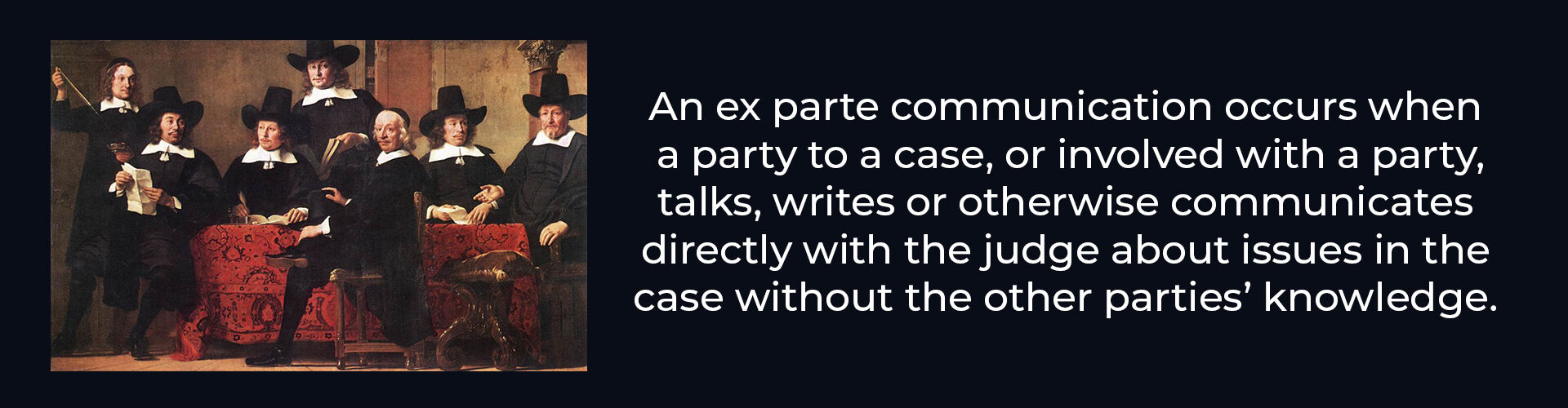
Ex parte “Ex parte” is a Latin phrase meaning “on one side only; by or for one party.” An ex parte communication occurs when a party to a case — or someone acting for that party — communicates directly with the judge about issues in the case without the other parties’ knowledge. Under the Judicial Code of Conduct, judges may not permit or consider ex parte communications unless expressly allowed by law. This prohibition exists to ensure fairness, to prevent manipulation, and to preserve public trust in the legal system.
Both the TIO and his appointed arbitration resource unit withheld vital arbitration evidence from investigation during the COT arbitrations.
Transcripts from the clandestine gathering on 22 March 1994 confirm that the COT cases were not represented (refer to Open letter File No 54-A). The author of the minutes, Telstra’s Simon Chalmers, deliberately omitted points 4 and 5, jumping directly from point 3 to point 6. The absence of points 4 and 5 is not a clerical error; it is a red flag.
The appointed arbitrator, Dr Gordon Hughes, should never have permitted this secret meeting without representation for the COT cases. In any functioning Western democracy, both defendants and claimants, or their legal representatives, are expected to be present in the judge’s chambers during such proceedings. Yet here, only the defendants, the TIO, and his special counsel attended. They discussed alterations to the arbitration agreement behind closed doors, without the claimants’ knowledge.
The missing points 4 and 5 in the Telstra transcript are particularly troubling. Were changes to the arbitration agreement agreed upon during this secret meeting? Is this why those points were removed?
It may also be that Telstra and Dr Hughes agreed that Telstra would first allow the arbitration resource unit access to all arbitration procedural material (AS-CAV Exhibits 589 to 647 — see AS‑CAV 590, Chapter Seven). This arrangement allowed the resource unit to decide which documents Dr Hughes and the claimants could see, and which it would discard.
We will never know what was concealed from the COT cases during this clandestine gathering. Eighteen months after the first arbitration was finalised, the arbitration resource unit admitted in writing (see Open letter File No/45-H) to Dr Hughes that they had concealed at least four relevant billing claim documents from the arbitration process.
The missing questions at points 4 and 5 may be linked to the arbitrator and his resource unit covertly addressing adverse findings against Telstra outside the legal arena of the COT arbitration process. If addressing non‑addressed arbitration issues had nothing to do with points 4 and 5, then what was so damaging that these points were excluded from the minutes?
Open letter File No 54-A shows that Telstra’s arbitration liaison officer Steve Black, Telstra’s general counsel David Krasnostein, Telstra’s lawyer Simon Chalmers (Freehill Hollingdale & Page), TIO special counsel Peter Bartlett, arbitrator Dr Gordon Hughes, TIO Warwick Smith, and his secretary Jenny Henright attended this clandestine meeting. Except for Jenny Henright, all were lawyers — all knew this was an illegal gathering. What was so important that only the arbitrator and the defence attended?
Why weren’t the COT cases and their lawyers advised of this meeting?
Upon reading this segment (Open letter File No 54-A) and the following Prologue page, you will reach the same conclusion many others have: arbitrator Dr Gordon Hughes should never have secretly met with Telstra, the defendants, prior to arbitration to discuss which rules in the arbitration agreement would be removed and which would remain. This clandestine meeting (without the claimants being represented) also covered how to protect, to exonerate, the arbitrator’s consultants from liability for negligence and to exempt the resource unit from being sued. This directly harmed the COT cases and our legal right to hold the resource unit accountable if it acted negligently.
It will be clear, after reading Open letter File No 54-A and the Prologue page, that the arbitration resource unit was negligent during my arbitration process. I could not hold them to account because those liability clauses were secretly removed from my arbitration agreement.
This is a serious issue and should have been addressed in 1995 when it was discovered. An investigation twenty years ago would have uncovered that Dr Hughes and TIO Warwick Smith used Telstra’s proposed arbitration agreement as the base document for the COT arbitration agreement, rather than using an agreement drafted independently of Telstra, as both the government (who endorsed the first four arbitrations) and the COT cases’ lawyers were promised. An investigation in 1995 (see Prologue Chapter Four) would also have uncovered Dr Hughes’ 12 May 1995 letter to Warwick Smith, condemning the Telstra‑based agreement as not credible, yet he used it in my arbitration.
I have always maintained our lawyers thought we were signing the arbitration agreement, the first of the four COT Cases Maureen Gillan had signed two weeks before. I only agreed to clause 10.2.2. being removed. With our banks declaring they were ready to take over our assets if we could not show imminent settlements, I buckled and agreed to remove only that clause.
No matter how much pressure was applied to them, no one in their right mind would have accepted a compromise of such magnitude. Modifying clause 24 and removing clauses 25 and 26 meant we could not sue the TIO-appointed arbitration consultants (there were several) for acts of negligence. The legal counsel to the arbitration and the professional consultants were bulletproof. They could freely do whatever they liked when they liked, and there was nothing anyone could do. This website, absentjustice.com, shows this is precisely what happened.
On the day we signed the arbitration agreement (see Open letter File No 54-B), clause 10.2.2 and the $250,000.00 liability caps in clauses 25 and 26 had been removed, and clause 24 had been modified. We were informed that there would be no arbitration if we did not accept these last-minute changes. Additionally, we were told that our lawyers had been notified of these changes. However, there is no record of our lawyers accepting these modifications
The Secret Meeting tells it all the way it was
Telstra's minutes from this clandestine meeting show no COT claimant or their representative were present at this important meeting show at point six that:
“Mr Bartlett stated that he was unhappy that Telecom did not appear prepared to allow his firm an exclusion from liability. …
“Mr Smith stated that he thought it was reasonable for the advisers to incur some liability, and that the only matter left to be negotiated on this issue was the quantum of the liability caps.
“Mr Black said that he thought the liability caps proposed by Telecom in the amended rules were already reasonable.” (See Open letter File No 54-A)
Points 4 and 5
The fact that Open letter File No 54-A shows the author of these minutes has left out points 4 and 5, i.e., point 6 follows point 3, is of great concern. Where are points 4 and 5?
What information was initially exposed in those two points that prompted Telstra’s lawyers to remove them from the minutes the arbitrator would have received or composed his own? (see Open letter File No 54-A.
The TIO (administrator to the arbitrations), Telstra, and the arbitrator have refused to provide those removed clauses even though the Commonwealth Ombudsman sought that information on my behalf between October 1995 and October 1997.
I reiterate that Telstra, the TIO, and the arbitrator state that the confidentiality clauses in the arbitration allow them to disclose nothing about the conduct of our arbitrations to the claimants and the public.
This further proves that Dr Gordon Hughes should never have allowed this secret meeting without the COT cases being represented. Most, if not all, Western democracies would condone allowing the defendants and their lawyers to be present in the judge’s chambers (arbitrator’s office). The missing discussion material or questions raised at points 4 and 5 may well be why the parties present agreed to Telstra lawyers drafting the agreement instead of the independent arbitration agreement the government and claimants were assured would be used. It could also be that Telstra and the arbitrator, Dr Hughes, agreed that Telstra would first allow the arbitration resource unit access to all arbitration procedural material (AS-CAV Exhibits 589 to 647 - See AS-CAV 590, Chapter Nine). This allowed them to decide which documents Dr Hughes would see and which would be discarded (see also page 4 here, which shows Telstra’s Steve Black wrote to Warwick Smith on 24 July acknowledging the resource unit would be allowed to vet which documents Dr Hughes would see and which he would not.
We will never know what was concealed from the COT cases during this clandestine gathering. However, in writing, Ferrier Hodgson Corporate Advisory admitted to Dr Hughes that they concealed at least four relevant billing claim documents from the arbitration process.
To date, the TIO has declined to explain what changed. Who pressured the TIO to allow the advisors to be exonerated from all liability concerning our arbitrations? Why would the TIO special counsel be:
“unhappy that Telecom did not appear prepared to allow his firm and exclusion from liability”?
Why did it not occur to the TIO or the arbitrator that removing the directions regarding liability would allow complacency to creep into the arbitration process? This is precisely what our absentjustice.com pages show happened.
Had COT cases been represented at this hearing (as we were legally supposed to be), we would have known before 21 April 1994, the day we signed this document, that our rights to fair arbitration would be violated.
Ann Garms, Graham Schorer, and I only found out after our arbitrations had been concluded that these exonerated consultants had been given a secret charter by Warwick Smith, with the approval of Telstra's arbitration defence officer, Steve Black, to vet all of the arbitration material going to the arbitrator, Dr Gordon Hughes. They were allowed to decide what the arbitrator viewed and then passed it on to us, the three claimants.
Hiding behind a tainted confidentiality agreement
Although the 19th April 1994 Arbitration Agreement issue has been addressed elsewhere on absentjustice.com, it is important to link it here to the issue of the arbitrator's secretary faxing a copy of the FTAP Agreement to lawyers Mr Goldberg and William Hunt. Mr Hunt sought a legal opinion on the agreement before Graham Schorer, Ann Ga,rms and I were to sign it on 21st April 1994. The following three clauses are included on page 12 of the version of the agreement faxed by the arbitrator's secretary:-
Clause 24: Neither the Administrator nor the Arbitrator shall be liable to any party for any act or omission in connection with any arbitration conducted under these Rules save that the Arbitrator (but not the Administrator) shall be liable for any conscious or deliberate wrongdoing on the Arbitrator’s own part.
Clause 25: The liability of Ferrier Hodgson and the partners and employees of Ferrier Hodgson for any act or omission in connection with any arbitration conducted under these rules (other than in relation to a breach of their confidentiality obligations) shall be limited to $250,000 jointly.
Clause 26: The liability of DMR Group Australia Pty Ltd and the directors and employees of DMR Group Australia Pty Ltd for any act or omission in connection with any arbitration conducted under these rules, other than in relation to a breach of their confidentiality obligations) shall be limited to $250,000 jointly.
In the agreement presented to the COT claimants for signing two days later, on 21st April 1994, clauses 25 and 26 were removed, and only some of the wording was added to clause 24
The final version of Clause 24 reads:
“Neither the Administrator, the Arbitrator, the Special Counsel, a partner or employee of the legal firm of which the Special Counsel is a partner, a member of the Resources Unit, Ferrier Hodgson or a partner or employee of Ferrier Hodgson, DMR Group Australia Pty Ltd shall be liable to any party…”
Clause 24 now had a different meaning than the original three separate clauses. It freed the arbitration special counsel from any risk of being sued for misconduct in their role as legal advisors in the process, thereby providing no incentive for them to ensure that the COT claimants were involved in a fair and just process.
The altered clause 24 also removes the original $250,000 liability cap against FHCA and DMR from the Arbitration Agreement faxed to Mr Goldberg and William Hunt on April 19, 1994.
This letter, in June 1994, from Telstra’s Arbitration Liaison Officer to the TIO Special Counsel, who had been exonerated from all liability for his part in the first four COT arbitrations, included the new version of the arbitration agreement that would be used for the next 12 COT claimants. Point 11.2 of this new agreement states that
“The liability of any independent expert resource unit used by the arbitrator, for any act or omission on their part in connection with the Arbitration, shall be limited to $250,000.00″.
Thus, a few months after the $250,000 liability caps had been removed from my arbitration agreement, they were reinstated for the remaining 12 COT claimants. Why were the claimants NOT advised of the reinstatement of the liability clauses? Why were we not offered the opportunity to revert to the original agreement that the arbitrator’s secretary faxed to Alan Goldberg and William Hunt (our lawyers) as the approved final agreement? Why were the three claimants (including me) forced to continue with an arbitration agreement that allowed the Resource Unit to be safely exonerated from all liability, YET, in the agreement used by 12 other COT claimants, they were mandated to conduct those arbitrations in accordance with the law?
Three COT claimants, Graham Schorer, Ann Garms and I, were discriminated against without question. Exhibit Hacking-Julian Assange File No/42 is from the TIO’s Standard Arbitration Rules used for other COT-type claims against the Telstra Corporation. Liability is covered in Rule 31, which states:
“The liability of any independent expert used by the Arbitrator is limited to $250,000 for any act or omission on their part in connection with the Arbitration”.
This means that any Australian citizen who enters into a TIO-administered arbitration could sue any independent expert used by the arbitrator to the limit of $250,000 “for any act or omission on their part in connection with the Arbitration”. Graham Schorer and I were not afforded these same entitlements. This was, in fact, both illegal and discriminatory. That the defendants (Telstra) in arbitration were able to discuss with the official administrator of the process (in this case, the TIO) whether certain discovery documents or pieces of evidence should be released to the arbitrator and even whether they should be released at all, shows just how much control the defendants (Telstra) had over the administrator.
If the removal of the $250,000 liability caps for one section of the COT group, while leaving them intact for all other COT cases, isn't the epitome of corrupt and treacherous discrimination by Australia's establishment, then what is?
Maureen Gillan, the first of the four COT Cases, naively signed her arbitration agreement, entangled in clauses 10.2.2, 24, 25, and 26. Ann Garms, Graham Schorer, and I informed our legal advisors about Maureen’s agreement, believing we were on solid ground. Our lawyers then requested that the arbitrator's office provide a fax of Maureen's signed document. Senators Richard Alston, a qualified barrister, and Ron Boswell confirmed that the faxed arbitration agreement was identical to Maureen's. This mirrored the deception that had permeated the entire process.
Amanda Davis, the former General Manager of Consumer Affairs for the government regulator AUSTEL, had misguidedly convinced Maureen to sign it, claiming the $250,000 liability caps were a safety net that would allow us to pursue the arbitration consultants for negligence. This was portrayed as a win-win situation, yet it was nothing more than a facade—especially after years of battling with Telstra, we were led to believe we had secured a protective agreement.
It was not until the day we were scheduled to sign the agreement, April 21, 1994, that we discovered it had been altered, specifically by removing liability clauses 25 and 26. When we refused to sign the revised document because of these modifications, we faced significant pressure to accept the altered terms, as failing to do so would jeopardise the arbitration process and necessitate legal action against Telstra. This situation presented a serious dilemma, as none of us possessed the financial means to pursue a lawsuit. Ultimately, we acquiesced to the removal of these essential clauses, unaware that Dr Hughes had previously conspired to alter them after Maureen Gillan signed her agreement on April 8, 1994. This is substantiated by a covert letter he sent to the arbitration administrator. This underhanded manoeuvre underscores the arbitrator's reprehensible conduct and reveals the systemic corruption inherent in the entire process.
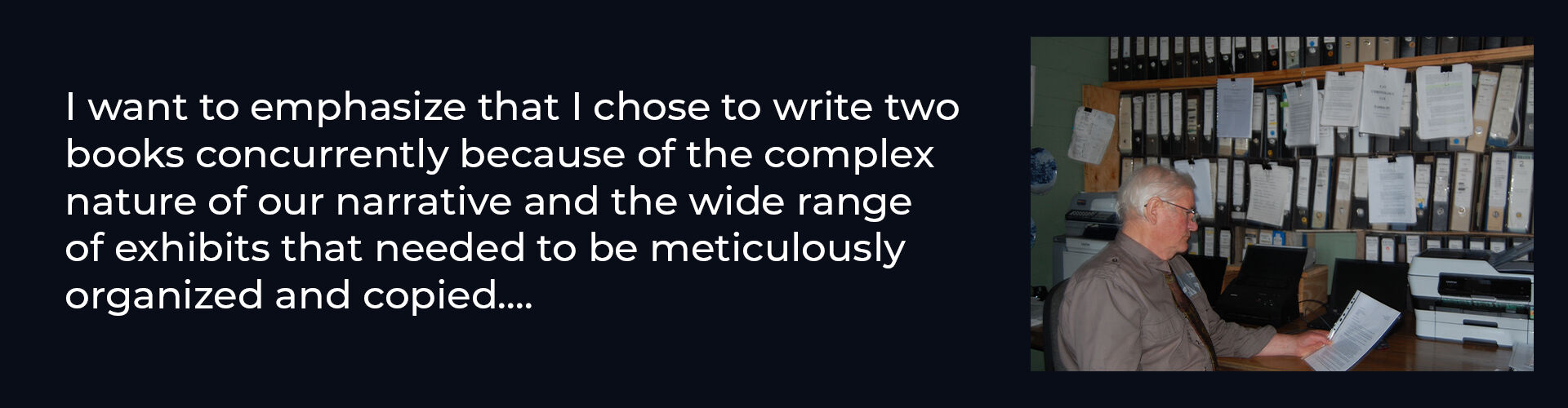
The minutes of this secret meeting with Steve Black (Telstra's arbitration officer), Telstra's Mr Krasnostine (legal directorate), Dr Hughes (the arbitrator), and Peter Bartlett (TIO Counsel) show that this meeting discussed alterations to the arbitration without the claimants being represented. Telstra's transcript of this meeting notes at point six that:
“Mr Bartlett stated that he was unhappy that Telecom did not appear prepared to allow his firm an exclusion from liability. …
“Mr Smith stated that he thought it was reasonable for the advisers to incur some liability, and that the only matter left to be negotiated on this issue was the quantum of the liability caps.
“Mr Black said that he thought the liability caps proposed by Telecom in the amended rules were already reasonable.” (See Open letter File No 54-A)
The fact that Warwick Smith stated he "...thought it was reasonable for the advisers to incur some liability, and that the only matter left to be negotiated on this issue was the quantum of the liability caps" shows the liability caps were always supposed to have been in our arbitration agreement, the same agreement that Maureen Gillan signed.
Since the conclusion of my arbitration, all parties, including Telstra, the arbitrator, Peter Bartlett, and TIO Warwick Smith, have used the confidentiality agreement (which was attached to the altered agreement) as the reason they will not discuss the secret alterations to clauses 24, 25, and 26 and the other unlawful conduct that festered all the arbitrations.
On April 12, 1994, Telstra received a letter from Dr Hughes addressed to Peter Bartlett, TIO's Special Counsel. This letter, numbered FOI folio A59256/7 and available for reference in Open letter File No 54-B, indicates that the remaining three COT Cases had yet to sign their arbitration agreements. Notably, the letter bears a Telstra FOI folio number, indicating that the arbitrator and Telstra had already established a system for communicating regarding the COT arbitrations. This system, however, failed to copy that information to the COT claimants, as mandated by the arbitration procedures. The letter discusses the same exoneration liability caps in the Arbitration Agreement that Dr. Hughes tried to include during the secret arbitration meeting on March 22, 1994, as detailed in Open letter File No 54. This highlights Telstra's and the arbitrator's ongoing efforts to arbitrate the COT cases in a manner that did not accurately reflect the procedural guidelines.
This letter Open letter File No 54-B discusses overcoming the issue that one of the four COT cases (Maureen Gillan) had already signed the arbitration agreement on 8 April 1994. This version was the agreement reached by Senators Richard Alston and Boswell, along with all four COT cases and their lawyers. However, John Rundell’s arbitration resource unit now sought exoneration from all liability for any act or omission related to the remaining three arbitrations. They removed the $250,000 liability caps from the original agreed-upon agreement, thereby eliminating any incentive for the resource unit to act responsibly towards the three remaining claimants.
As our documents Open letter File No/45-A to 45-I and File No/46-F to 46-J show, the arbitration resource unit withheld some essential, relevant documents from my arbitration process, knowing they could not be sued for that unacceptable conduct.
Being forced to sign an arbitration agreement without the necessary documents to prove your claim is a terrible situation, but being forced to sign it after it had been altered to protect only TIO Legal Counsel and the arbitrator's arbitration resource unit shows how much the arbitrator and administrator disregarded the COT Cases.
The Covert Deal
11th July 1994: Steve Black (Telstra's arbitration liaison officer) writes to Warwick Smith (the arbitration administrator), stating:-
“Telecom will also make available to the arbitrator a summarised list of information which is available, some of which may be relevant to the arbitration. This information will be available for the resource unit to peruse. If the resource unit forms the view that this information should be provided to the arbitrator, then Telecom would accede to this request.”
The statement in Mr Black’s letter:-
“If the resource unit forms the view that this information should be provided to the arbitrator”,
confirms both Warwick Smith and Mr Black were fully aware that the TIO-appointed Resource Unit, Ferrier Hodgson Corporate Advisory, were secretly assigned to vet most, if not all, the arbitration procedural documents en route to Dr Hughes. If FHCA determined that a particular document was not relevant to the arbitration process, it would not be forwarded to Dr Gordon Hughes or the other parties. (Refer to File 590 → AS-CAV Exhibits 589 to 647)
Page 5 of the Commercial Arbitration Act 1984, under Part 11 – Appointment of Arbitrators and Umpires states:-
(6) Presumption of single arbitrator
“An arbitration agreement shall be taken to provide for the appointment of a single arbitrator unless –
(a) the agreement otherwise provides; or
(b) the parties otherwise agree in writing.” ( Refer to File 193-B GS-CAV Exhibit 155 to 215)
The FTAP agreement, signed by Ann Garms, Maureen Gillan, Graham Schorer, and me, was signed between 8 and 21 April 1994 and mentions only one arbitrator. We have never seen any written agreement that allows a second arbitrator to determine what information the first arbitrator will see.
Next Page ⟶