Portland Memorial Vietnam Peace Park

Please visit → https://shorturl.at/aejRT
By courtesy of Yu Xiangzhen, May 2019 → https://shorturl.at/kRTUW
"On May 16, 1966, I was practicing calligraphy with my 37 classmates when a high-pitched voice came from the school’s loudspeaker, announcing the central government’s decision to start what it called a “Cultural Revolution.”
It was my first year of junior high, I was just 13.
“Fellow students, we must closely follow Chairman Mao,” the speaker bellowed. “Get out of the classroom! Devote yourselves to the Cultural Revolution!”
Two boys rushed out of door, heading to the playground yelling something.
I left more slowly, holding hands with my best friend Haiyun as we followed everyone else outside.
It would be my last normal day of school."
FOOD AND TRADE IN LATE MAOIST CHINA, 1960-1978
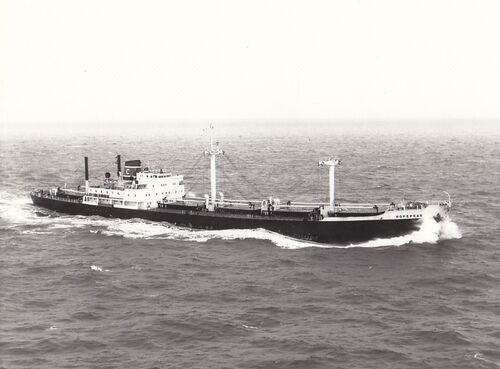
The historical record is deliberately fractured when a government prioritises wartime commerce over the survival of its conscripted soldiers and the eyewitness testimony of its maritime fleet.
The Academic Ledger vs. The State Cover-Up
In January 2024, I revisited Dr Tianxiao Zhu’s University of Minnesota doctoral thesis, Secret Trails: Food and Trade in Late Maoist China, 1960–1978. Rereading the space between Footnotes 82 and 85, I found the clinical veneer of history dissolving. Zhu specifically names the British-manned cargo ship Hopepeak—the exact vessel on which I served from June 28 to September 18, 1967, under British Seaman's Record R744269 - Open Letter to PM File No 1, Alan Smith's Seaman. → Chapter 7- Vietnam-Vietcong-2). However, while Zhu captures the incident's structural echoes, the official statements he cites from Sir John McEwen, the Australian Minister for Trade and Industry, reveal calculated state deception.
Minister McEwen stood before Parliament and later the British media, smoothly dismissing the crew’s refusal to sail back to China as a mere "afterthought" cooked up once they had flown from Sydney back to London. This was a deliberate, state-sanctioned lie. McEwen knowingly suppressed a critical fact from the public: the Commonwealth Police (now the Australian Federal Police) didn't wait for an afterthought—they met the Hopepeak at the dockside in Sydney on September 17, 1967.
They were there because the ship's Captain had actively broken radio silence during the voyage home, alerting Australian authorities that his crew was in open mutiny and that multiple young crew members, including me, had been frog-marched down the Chinese wharves under armed guard, facing imminent execution as Western spies.
The True Cost of the Cargo Hold
The British seamen aboard the Hopepeak had watched me being marched down that gangway by Red Guards on two separate occasions, fully believing I was walking to my death. My survival wasn't a matter of bureaucratic leniency; it was a cold, mathematical calculation. My life was temporarily valued because it was tied to the 13,600 tons of Australian wheat waiting to be loaded back home for the return voyage.
The crew’s absolute refusal to sail back to a hostile Communist state was an unprecedented event in maritime history. To dismiss it as a delayed complaint is absurd. If the danger was a fabrication, why did the shipowner willingly absorb the catastrophic expense of flying the entire original crew back to England and flying an entirely new replacement crew out to Sydney? A corporate entity does not fund two full crews simultaneously over a fabricated "afterthought." They did it because the men put their livelihood on the line—willingly accepting a damning "Voyage Not Completed" stamp in their Seaman’s Discharge Books, a mark that blacklisted them from future maritime employment, rather than returning to a hostile port.
The Hospital Ambush and Forced Ultimatums
The level of psychological warfare we endured was severe. While berthed, quayside floodlight poles blared aggressive, English-language communist propaganda twenty-four hours a day to keep the wharf labourers working through the night. Sentries stood at the gangway checking credentials, while rumours swirled through the fleet that two young Chinese girls had been caught aboard a sister ship and summarily executed as prostitutes, their bodies abandoned on the deck.
In this environment of heightened paranoia, I was targeted. Red Guards marched me off the vessel to a local hospital under the fabricated accusation that I had contracted syphilis. When I looked at the unsterilised needle they intended to inject into my arm, I refused and caused a massive scene. In 1967 Maoist China, defiance was a capital offence.
I was placed under tight house arrest on the ship for days under constant threat of execution, alongside another crew member who had resisted reciting verses from Mao’s Little Red Book. Desperate to keep me alive, the ship's officers scrambled to draft two formal apology letters addressed directly to Chairman Mao and the People's Republic of China.
The Red Guards rejected them instantly. Under the barrel of a gun, they forced a third, highly specific text upon me:
"I am a US aggressor and a supporter of Chiang Kai-shek and the Chinese Nationalist Party."
When I told the Captain that signing this was signing my own death warrant, the Second Steward—who managed the ship’s official correspondence—insisted that refusing it meant immediate death on the wharf. He frantically suggested a strategic edit to appease the commanders, altering the text to read that I "disliked America and its bloody invasion of North Vietnam."
The Leveraged Threat: Wheat for Blood
Terrified and in a complete daze, I was ordered to hand-deliver this forced confession directly to the Chinese Commander on the wharf. Right before I stepped off the vessel, the Third Officer—a native of Mauritius—pulled me aside and handed me the ultimate leverage. He had analyzed the financial ledger of the trade agreement.
The Chinese regime had already paid for the 13,600 tons of wheat currently unloading, and the money for the next shipment was in transit, frozen until the Hopepeak returned. The Third Officer walked directly into the crosshairs and made the terms explicit to the Chinese Commander: If this boy is shot, the Australian wheat pipeline stops permanently, the current funds will be legally frozen, and the shipowners will win the international arbitration on appeal because your state breached the safety of the port.
This economic counter-threat was the only reason I walked back up that gangway alive.
The Burden of Sovereign Betrayal
When we finally berthed in Sydney, I poured these exact details out to the Commonwealth Police and a journalist contracted by the ship's agent. Driven by a burning sense of civic duty, I discovered the identity of Australia’s Minister for the Army—a young Malcolm Fraser—and wrote a formal letter directly to him, begging the Holt government to halt the next shipment and protect our deployment lines.
My pleas were buried. They cleared the Hopepeak, re-crewed it, and sent it back to Communist China carrying 13,600 tons of Australian grain.
The true historical tragedy is not just that John McEwen and the Australian government systematically smeared brave British and Canadian merchant seamen to preserve a lucrative trading monopoly. The tragedy is that the state consciously chose to trade with the regime feeding the enemy. Australia will never truly calculate how many thousands of tons of that specific wheat went directly into the supply packs of North Vietnamese guerrillas, sustaining them in the jungles right before they turned their weapons on conscripted Australian, New Zealand, and American soldiers.