Australian Federal Police Investigations-1
Humanitarian Aid, War, and the Burden of Silence

CHINA
My experience aboard The Hopepeak shaped how I understand humanitarian aid, military sacrifice, and government accountability. The events of 1967 left me with the enduring belief that humanitarian assistance must never be considered independently of the political and military circumstances in which it is delivered.
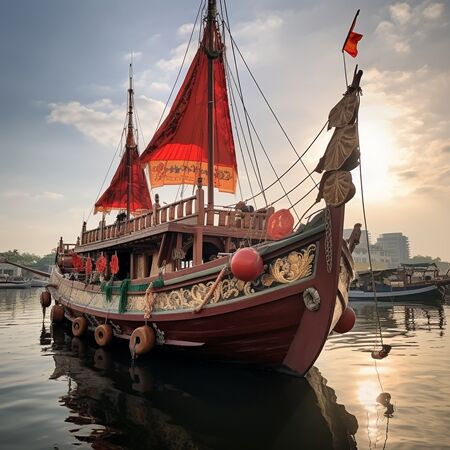
As a young man of 25, after signing on board the British-manned ship Hopepeak, I found myself on my way to Communist China in 1967 during the height of the Vietnam War—and not to Canada, as I had been falsely promised. This journey would morph into a surreal nightmare when I uncovered a devastating truth hidden within the cargo hold: the Australian wheat we had brought to China on supposedly "humanitarian grounds" because China was starving was actively being redeployed straight to North Vietnam. There, in the dense jungles, that very wheat was sustaining the communist forces who were killing and maiming Australian, New Zealand, and American troops.
For uncovering this illicit diversion, I was marched off the Hopepeak under armed guard by Chinese Red Guards, facing certain charges of spying. What followed was a period of terrifying ship's arrest. Trapped under constant surveillance by Red Guards stationed thirty paces apart day and night, I was pressured into writing a forced confession describing myself as a United States aggressor and supporter of Chiang Kai-shek. It was during this agonising wait, not knowing whether my forced letters to the People's Republic of China would save my life or end it, that the second steward quietly suggested I write to my parents.
I followed his advice and wrote a 22-page foolscap letter, believing I might not survive the week. In it, I chose to speak with absolute honesty. I confessed to them that the woman they believed was my landlady was, in fact, my 42-year-old lover, who had been my primary source of stability between 1963 and 1967. I wrote about the profound loneliness, the confusion, and the claustrophobic terror of my detention.
While under house arrest on the ship, I also witnessed severe local deprivation. We routinely discarded half-eaten sausages, steaks, and baked potatoes from our galley into a sea devoid of seagulls or fish. Seeing the desperate hunger in the faces of the people watching us eat, I began filling a small metal tray with edible leftovers, placing it on a deck bench, patting my stomach to show I was full, and walking away. Within ten minutes, the tray was empty. I repeated this for two days. Miraculously, the Red Guard who had been waking me every single hour on the hour suddenly stopped. Perhaps a small, silent act of human compassion had broken through the political madness of the Cultural Revolution.
On 18 September 1967, after the ship's Captain used the radio to alert Australia to my ordeal, we finally returned. I immediately reported my concerns to the Commonwealth Police and wrote a formal, handwritten letter to the Hon. Malcolm Fraser, then Minister for the Army, which I signed and which one of the visiting Commonwealth Police officers countersigned. The crew explicitly told the Captain that they were terrified and entirely unprepared to make another trip to China with more paid wheat.
This defining trauma became the hidden anchor of my entire absentjustice.com story. Decades later, during my 1993 and 1994 telecommunications dispute, I telephoned Malcolm Fraser to discuss that original 1967 letter and why its contents were still haunting my life. Under Freedom of Information (FOI) in 1994, I finally extracted the official records of those 1993–1994 telephone conversations with Mr Fraser to present to the Commonwealth Ombudsman, the arbitrator, and the Australian Federal Police.
To my horror, the documents were a farce. Although both records were a page long, the government had completely redacted the substantive content of both conversations. Seeing those clean, state-sanctioned blackouts instantly fractured my reality, triggering a massive, visceral flashback of the absolute terror I had suffered at the hands of the Chinese Red Guards.
This site preserves the primary documents, footnotes 83, 84, and 169 from Dr Tianxiao Zhu’s University of Minnesota thesis, and the courageous accounts of the British and Canadian merchant seamen who later quit their ships in protest. They verify a brutal historical ledger: the Australian Government consciously traded the lives of its frontline soldiers against wartime commerce with a communist regime.
You can download every exhibit, every file, and all 36,000 damning documents supporting this decades-long forensic archive of institutional betrayal from this website, free of charge. Explore the evidence trails below, follow the file numbers, and see firsthand how the machinery of state power systematically erases the truth to protect its own corruption.
When a state-backed monopoly formally codifies document starvation as a defensive legal strategy, the thin veneer of an independent, rules-based tribunal completely dissolves.
The Corporate Admission of Extortion
When the Commonwealth Ombudsman formally investigated the unlawful withholding of discovery materials, Telstra’s executive hierarchy offered a chillingly candid, written admission of obstruction. Confronted by the Director of Investigations, John Wynack, regarding why critical technical files, network logs, and engineering reports were being systematically withheld from the claimant, Telstra explicitly stated that they were:
"...concerned at the publicity and significant diversion of Telecom resources caused by the recent release of certain information by Mr Smith and that the delay in release of documents was due to the need for Telecom to check all documents prior to release so that Telecom is alert to the possible use or misuse of sensitive information."
This is the smoking gun of the Casualties of Telstra (COT) arbitrations. It is not an administrative excuse; it is a formal confession of an unlawful, bad-faith campaign of evidence suppression. A multi-billion-dollar corporation, fully owned by Australian taxpayers, openly admitted it was weaponising the Freedom of Information (FOI) process to vet, stall, and block critical forensic evidence. They did this simply because they were terrified that my exposure of their defective infrastructure, including their rogue call-intercept hardware—would enter the public domain.
The Ombudsman’s Indictment: Refusing the Gag Order
Commonwealth Ombudsman Philippa Smith saw entirely through this corporate extortion. She recognised that Telstra was using its immense institutional power to run a secondary, clandestine clearance gate on legally requested documents, explicitly to gauge how "sensitive" the data was before allowing it to reach the arbitration chamber.
In her final evaluation, the Ombudsman directly condemned this conduct, concluding that Telstra's decision to hold the statutory arbitration rules hostage was entirely unreasonable. She made it clear that a defendant cannot deny participants their legal rights, starve them of the documentation necessary to prove their financial losses, and demand absolute silence and submissiveness as a prerequisite for document release (See AS-CAV 64).
The paradox was entirely Kafkaesque. As an Australian citizen, the state gave me strict written and verbal directives to fulfil my civic duty by providing the Australian Federal Police (AFP) with every piece of forensic evidence proving that Telstra was systematically intercepting our private telephone lines, faxes, and legal strategies. I obeyed the law. Yet because I carried out my duty to the Crown, the state-owned telecom monopoly retaliated by freezing my access to the technical data required to build my claim, while the Telecommunications Industry Ombudsman (TIO) and the arbitrator stood by and let the extortion succeed.
The weaponisation of state power against a private citizen peaks when corporate espionage, bureaucratic paralysis, and historical political retaliation converge into a singular, structured trap.
During my high-stakes 1994 arbitration, the boundaries between past whistleblowing and present commercial warfare dissolved entirely. I made it clear to National Party Senator Ron Boswell, who was aggressively fighting for the Casualties of Telstra (COT members), and to AFP Superintendent Detective Sergeant Jeffrey Penrose, that the federal executive was systematically victimising me. The state-owned telecom monopoly had seamlessly absorbed my 1967 China wheat disclosure into its corporate agenda, turning a statutory commercial tribunal into a covert intimidation environment designed to enforce my absolute silence.
The Intelligence Pipeline: Exploiting the Over-Forty Singles Club
As I combed through the fragmented Freedom of Information (FOI) documents Telstra routinely delayed, a chilling reality surfaced: the corporation hadn't merely been intercepting my business lines; it had been mapping my commercial existence for years. They held illicit logs detailing the operations of my weekend "Over-Forty Singles Club", a vital revenue stream I had engineered to keep the Cape Bridgewater Holiday Camp financially afloat while the phone network failed. They held my female patrons' private names, phone numbers, and cross-strait transit patterns, harvested raw technical data, and distributed it to external legal advisors and third-party telecom crawlers.
When I presented this systemic wiretapping to the AFP, evidenced in Australian Federal Police Investigation File No/1, the corporate retaliation was swift, blunt, and clinical.
Under Siege: The Rumble Ultimatum and Procedural Betrayal
By July 1994, the arbitration process had degenerated into pure extortion. Paul Rumble, Telstra’s senior arbitration official, unleashed a series of severe, overt threats. Telstra was playing with a marked deck; in a gross breach of protocol, the independent arbitrator had covertly leaked my confidential interim claim documents to Rumble five months before Telstra was legally permitted to view them. Armed with my complete legal strategy, Telstra executed an engineered campaign of document starvation.
Navigating this minefield required agonising precision. To buy breathing room and prevent the immediate disconnection of my telephone network, I was forced under extreme duress to author a literal hostage note on 4 July 1994, writing:
"I gave you my word on Friday night that I would not go running off to the Federal Police etc, I shall honour this statement, and wait for your response to the following questions I ask of Telecom below." (File 85)
This forced capitulation was my only alternative. Days earlier, Telstra arbitration liaison officer Steve Black delivered a ruthless ultimatum over the phone: if I continued providing forensic evidence of network interception to the AFP, Telstra would permanently cut off my access to the technical documents I needed to build my case. They weaponised my lack of telephone service as operational leverage.
When AFP investigators returned to Cape Bridgewater on 26 September 1994, they zeroed in on this forced letter. Page 12 of the official transcript recorded the investigator's sharp intrigue:
"The thing that I’m intrigued by is the statement here that you’ve given Mr Rumble your word that you would not go running off to the Federal Police etcetera."
At that precise moment, the façade of an independent tribunal collapsed. It was no longer a legal process; it was an ambush. They stripped me of the evidence the arbitrator needed to assess my losses, ensuring my final submission was judged on a poisoned, incomplete record.
The Ombudsman's Discovery: Actively Shielding Sensitive Misconduct
The systemic nature of this obstruction was formally cemented on 25 March 1995. Facing relentless investigation by the Director of Investigations, John Wynack, the Commonwealth Ombudsman, Philippa Smith, fired an explosive letter directly to Telstra’s executive hierarchy. She demanded an immediate explanation for an extraordinary admission of corporate guilt. Telstra explicitly told her office it was deliberately stalling, vetting, and withholding my discovery documents because it was concerned about a claimant's "possible use or misuse of sensitive information" during a live legal proceeding.
The state-backed monopoly openly held the statutory rules of arbitration hostage, penalising a citizen for performing his civic duty and demanding total submissiveness—a letter that stands as a primary, unassailable exhibit of institutional malice.
The Senate Exposure: Unmasking the Automated Lie
Faced with total bureaucratic paralysis from an administrator who refused to intervene, I triggered an emergency escalation through Senator Ron Boswell. On 29 November 1994, Boswell stood in the Australian Senate, turning the Hansard record into an indictment of corporate tyranny:
"Why did Telecom advise the Commonwealth Ombudsman that Telecom withheld FOI documents from Alan Smith because Alan Smith provided Telecom FOI documents to the Australian Federal Police during their investigation?"
Slicing through Telstra’s hollow, manufactured corporate denials, an incensed Senator Boswell demanded answers from the floor of the Parliament:
"...Why would Telecom withhold vital documents from the AFP? Also, why would Telecom penalise COT members for providing documents to the AFP which substantiate that Telecom had conducted unauthorised interceptions of COT members’ communications and subsequently dealt in the intercepted information by providing that information to Telecom’s external legal advisers and others?" (Senate Evidence File No 31)
The Absolute Reality of Corruption
What remains most damning about this state-sanctioned sabotage is the total, absolute impunity that followed. Telstra was a government-owned asset. The arbitrator was bound by statutory law. Yet the Telecommunications Industry Ombudsman (TIO), the Federal Government, and the tribunal team stood entirely idle while an ordinary Australian citizen assisting the Federal Police was systematically blackmailed, financially ruined, and legally silenced.
Neither the TIO nor the executive ever investigated the catastrophic impact this document starvation inflicted upon my final submission. The threats were public; they were lethal to the rule of law, and they showed how far a corrupted bureaucracy will go to absorb and crush a whistleblower who knows too much.
Murdered for Mao: The killings China ‘forgot’
The psychological anchor of a lifetime of whistleblowing is forged in the crucible of raw ideological terror, where human connection becomes the only currency that preserves sanity.
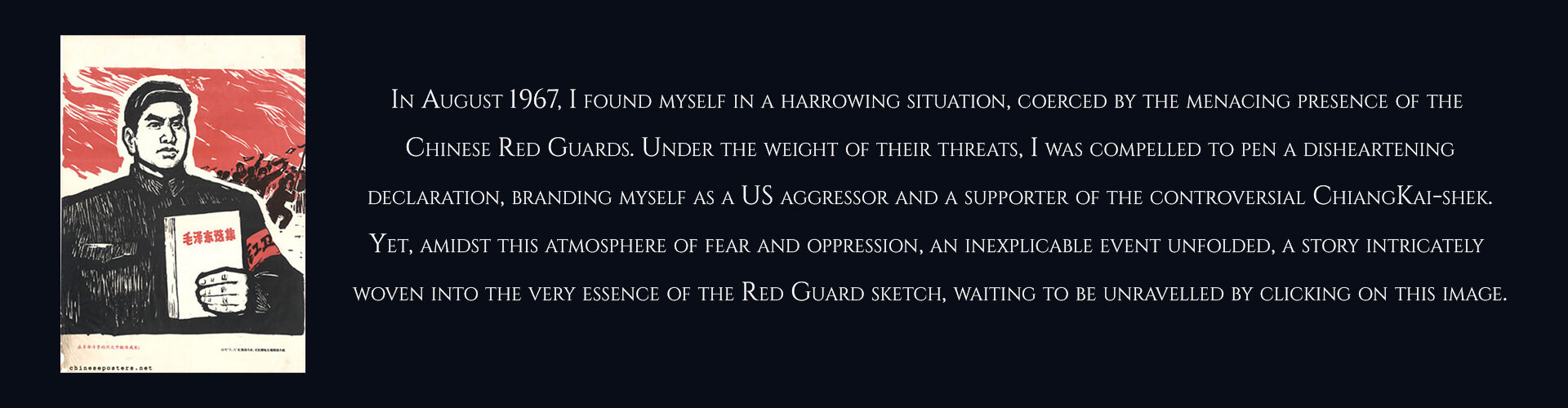
In August 1967, I found myself trapped in a situation so surreal and perilous that its sharp edges have never dulled. I was aboard a merchant cargo ship in China, entirely encircled by Red Guards. Positioned roughly thirty paces apart around the vessel's perimeter, these ideological soldiers remained on constant duty day and night, their eyes fixed on us.
After being systematically pressured into writing a false confession describing myself as a United States aggressor and a covert supporter of Chiang Kai-shek, the stakes reached a breaking point. The ship's second steward quietly pulled me aside. He whispered that the head of the Red Guards might respond within two days.
Then, he gave me a final, silent piece of advice: “Write to your parents.”
I understood the unstated gravity of his words. Believing with absolute certainty that I would not survive the week, I sat down and filled 22 foolscap pages. This was no ordinary family update; it was a final testament written so my parents would truly know who I was if I never returned home.
In that letter, I stripped away every protective fiction. I told them the truth: the woman they believed was merely my landlady was, in fact, my lover. She was 42; I was 18. From 1963 to 1967, she was the most vital source of emotional stability and grounding in my young life. I poured out everything onto those pages—the crushing loneliness of life at sea, the profound confusion, and the paralysing fear that accompanied my sudden detention. Writing that testament became my only sanctuary, a single opportunity to speak with absolute honesty while trapped in a system that forced me to sign a scripted lie.
A Tray of Leftovers and a Silent Exchange
Serving as both the ship’s cook and the duty mess-room steward, I saw the brutal contradictions of our environment up close. On deck, our crew ate hearty meals, occasionally balancing heavy plates on the ship's handrails. We crossed the ocean to transport grain to China for humanitarian relief, yet a grotesque paradox unfolded daily: we routinely discarded premium food while local people on the wharves suffered severe, visible deprivation.
We swept half-eaten steaks, sausages, and baked potatoes directly into the harbour. The waters were dead. No seagulls flew overhead; I saw no fish in the water. This total absence of wildlife was a stark, silent warning of how severe the conditions truly were. Hunger on that wharf was not an abstract political concept debated in Parliament. It was written cleanly in the faces and desperate movements of the guards watching us eat.
Following my formal arrest, I was placed under strict house arrest aboard the vessel. Driven by a desperate need to break the tension, I took a calculated risk. I filled a small metal tray with edible leftovers—clean food that otherwise would have been thrown directly into the stockpot—and placed it openly on a deck bench. I caught a guard's eye, patted my stomach to signal I had already eaten my fill, and walked away.
About ten minutes later, they wiped the tray completely clean.
At the next meal, I repeated the gesture, this time leaving behind a larger portion—enough to sustain three or four Red Guards. Again, I returned to find it empty. For two agonising days, while waiting for the verdict on my letters, I maintained this silent exchange.
During that exact window, the atmosphere shifted. The specific Red Guard who had made it his duty to barge into my quarters and wake me on the hour abruptly stopped his harassment. The ship's baseline tension remained incredibly high, but the immediate, suffocating pressure seemed to lessen.
I cannot state with historical certainty why that happened. The forced confession I signed offered no real protection. I will never know if my 22-page letter influenced a bureaucrat, whether official instructions were sent down the line, or if the relief was merely coincidental. Perhaps it was pure luck. But perhaps the food mattered. Perhaps a small, unnegotiated act of human compassion had carved out a temporary pocket of mutual recognition between individuals trapped on opposite sides of a violent political crisis.
All I know is that I offered that food without demand, negotiation, or expectation of reward. It was a silent, universal gesture that conveyed an absolute message:
I see you. I know you are hungry. I know you are human.
I have never claimed that this gesture alone saved my life or explains the chaotic events that followed. But it remains one of the clearest, most visceral memories of my 82 years on this planet—one of the few profound moments when raw terror gave way, however briefly, to the enduring strength of human connection.
In essence, the Australian government traded the lives of its soldiers engaged in the conflict in North Vietnam against the desperate need to provide sustenance for an entire nation teetering on the brink of starvation.
Footnotes 83, 84 and 169 → in a paper submitted by Tianxiao Zhu to - The Faculty of the University of Minnesota titled Secret Trails: FOOD AND TRADE IN LATE MAOIST CHINA, 1960-1978, etc → Requirements For The Degree Of Doctor Of Philosophy - Christopher M Isett June 2021
Tianxiao Zhu's Footnotes 83, 84, 169:
In September 1967, a group of British merchant seamen quit their ship, the Hope Peak, in Sydney and flew back to London. They told the press in London that they quit the job because of the humiliating experiences to which they were subjected while in Chinese ports. They also claimed that grain shipped from Australia to China was being sent straight on to North Vietnam. One of them said, “I have watched grain going off our ship on conveyor belts and straight into bags stamped North Vietnam. Our ship was being used to take grain from Australia to feed the North Vietnamese. It’s disgusting.”
84. The Minister of Trade and Industry received an inquiry about the truth of the story in Parliament, to which the Minister pointed out that when they left Australia, the seamen only told the Australian press that they suffered such intolerable maltreatment in various Chinese ports that they were fearful about going back. But after they arrived in London, Vietnam was added to their story. Thus the Minister claimed that he did not know the facts and did not want to challenge this story, but it seemed to him that their claims about Vietnam seemed to be an “afterthought.”
169. "...In Vancouver, nine sailors refused to work on a grain ship headed to China: two of them eventually returned to work, and the others were arrested. Just when the ship was about to sail, seven more left the ship but three of them later returned to work. In Sydney, six Canadian sailors left their ship; they resigned and asked to be paid, but the Australian immigration office repatriated them. At that time, a grain ship usually had crew members of about 40 people. A British ship lost the Chief Officer and sixteen seamen, who told journalists that if the ship were going to the communist countries, they would rather go to jail than work on the ship."
The Canadian Government and Its Moral Code of Ethics
Hover over the Canadian flag image below to learn about the strong ethical principles Canadian seamen upheld. Despite facing significant challenges, they believed that sending wheat to Communist China, especially when that wheat was being redeployed to North Vietnam, a country at war with Australia, New Zealand, and the USA, where hundreds of troops were being killed or maimed, was immoral and unethical, and therefore should not have been continued.
Yet the Australian Government made a conscious decision to maintain its trade relations with Communist China, despite knowing that a significant portion of Australia’s wheat was being diverted to North Vietnam. This wheat was not merely a trade commodity; it had the potential to sustain North Vietnamese soldiers who were directly engaged in combat against Australia and its allies during the conflict. This trade raised serious ethical questions about supporting a nation that opposed Australian, New Zealand, and US forces.
Examining this wheat agreement with the People's Republic of China, made during the Holt government in the mid‑1960s, is essential. This controversial deal had significant implications, but a government campaign obscured them by discrediting British and Canadian merchant seamen, including me. These brave individuals tried every conceivable legal way to expose this illicit diversion of wheat to North Vietnam.
All events on this website are backed by the original documents, every exhibit, every file, every damning scrap of evidence. Click the links below to open the PDFs instantly. Follow the file numbers. Each section exposes another layer of the machinery that was supposed to deliver justice but instead protected corruption.
Each of the 26 bracket‑numbered exhibits below contains hundreds of documents. Evidence File-1 and Evidence-File-2 alone authenticate 156 separate mini‑stories — everyone a shard of the same rotten truth. Very few websites dare to expose corruption across multiple arbitrations with this level of transparency. Fewer still provide thousands of numbered exhibits for the public to download at no cost.
Keep reading. The unbelievable story begins the moment the exhibit numbers end, and the treachery speaks for itself.
Example 2: File 34-C -
AS-CAV Exhibit 1 to 47 – AS-CAV Exhibit 48-A to 91 – AS-CAV Exhibit 92 to 127 – AS-CAV Exhibit 128 to 180 – AS-CAV Exhibit 181 to 233 – AS CAV Exhibit 234 to 281 – AS-CAV Exhibit 282 to 323 – AS-CAV Exhibit 324-a to 420 – AS-CAV Exhibit 421 to 469 – AS-CAV Exhibit 470 to 486 – AS-CAV Exhibit 488-a to 494-e – AS-CAV Exhibits 495 to 541 – AS-CAV Exhibits 542-a to 588 – AS-CAV Exhibits 589 to 647 – AS-CAV Exhibits 648-a to 700 – AS-CAV Exhibit 765-A to 789 – AS-CAV Exhibit 790 to 818 – AS-CAV Exhibit 819 to 843 AS-CAV 923 to 946 – AS-CAV Exhibit 1150 to 1169 – AS-CAV 1103 to 1132 – AS-CAV Exhibit 1002 to 1019 – AS-CAV Exhibit 996 to 1001 – GS-CAV Exhibit 1 to 88 – GS-CAV Exhibit 89 to 154-b – GS-CAV Exhibit 155 to 215 – GS-CAV Exhibit 216 to 257 – GS-CAV Exhibit 258 to 323 GS-CAV Exhibit 410-a to 447 – GS-CAV Exhibit 448 to 458 – GS-CAV Exhibit 459 to 489 – GS-CAV Exhibit 490 to 521 – GS-CAV 522 to 580 – GS-CAV Exhibit 581 to 609

Absent Justice Part 1, Part 2 and Part 3
Government Corruption. Corruption in the public service, where misleading and deceptive conduct has spuriously over more than two decades perverted the course of justice.

Telstra's Falsified BCI Report 2
Corruption, misleading and deceptive conduct plagued the COT with the government's sanctions, which endorsed the arbitrations. Learn the names of those who participated in these horrendous crimes that equally corrupted arbitrators who ignored this conduct.

Telstra's Falsified SVT Report
Corruption, misleading and deceptive conduct plagued the COT with the government's sanctions, which endorsed the arbitrations. Learn the names of those who participated in these horrendous crimes that equally corrupted arbitrators who covered up these atrocities

Senate Evidence
The criminal delinquency of those involved in the COT Cases corrupted arbitrations continued to practive their evil and crooked style of justice on other citizens who, like the Casualties of Telstra have had their lives ruined.

An Injustice to the remaining 16 Australian citizens
This type of skulduggery is treachery, a Judas kiss with dirty dealing and betrayal. This is dirty pool and crookedness and dishonest. This conduct fester’s corruption. It is as bad, if not worse than double-dealing and cheating those who trust the ground you walk on. Sheer Evil.<

China-Flash-Back-AFP Investigation -2
Read about the corruption within the government bureaucracy that is plaguing COT arbitrations. Learn who committed these horrendous crimes that equally corrupted lawyers and crooked arbitrators who covered up these crimes.
Telecommunications Industry Ombudsman
Corruption in government, including non-government self-regulators, undermines the credibility of that government. It erodes the trust of its citizens.

C A V Part 1, 2 and 3
Sadly, corruption and collusive practices are rife in the Australian ‘Establishment’ and this terrible situation prevents us from telling our story in a brief way. We had no alternative but to produce it the way we have here.
Blowing The Whistle
Blowing The Whistle was established on absentjustice.com to show our readers that the COT Cases arbitrations were nothing more than a sham set up to protect a government-owned asset.
Kangaroo Court - Absent Justice
From financial devastation to emotional pain, the dangers of identity theft are considerable.

Spurious and Unscrupulous Conduct

The first remedy pursued
The website that triggered the deeper exploration into the world of political corruption stands shoulder to shoulder with any true crime

The second remedy pursued
Checkout our bribery and corruption part & part and learn how deception undermines the credibility of those businesses who have been subjected to criminal legal abuse.
The third remedy pursued
Bribery and Corruption have many evil faces and ‘grey’ areas within Australia’s politically-corrupt government. Criminal wrongdoings interact with the private sector: the revolving door of deception.

The fourth remedy pursued
Bribery and Corruption have many evil faces and ‘grey’ areas within Australia’s politically-corrupt government. Criminal wrongdoings interact with the private sector: the revolving door of deception. Corrupt practices.

The fifth remedy pursued
Corruption in government, including non-government self-regulators, undermines the credibility of that government. It erodes the trust of its citizens, who are left without guidance. Bribery and Corruption is cancer that destroys economic growth.
The sixth remedy pursued
Corruption in government, including non-government self-regulators, undermines the credibility of that government. It erodes the trust of its citizens, who are left without guidance. Bribery and Corruption is cancer that destroys economic growth.
The seventh remedy pursued
Corruption in government, including non-government self-regulators, undermines the credibility of that government. It erodes the trust of its citizens, who are left without guidance. Bribery and Corruption is cancer that destroys economic growth.
The eighth remedy pursued
Legal abuse, or legal bullying, happens when someone uses the law or legal threats to control and scare you. Using this type of corrupt and deceptive conduct is evil and unscrupulous.
The ninth remedy pursued
Legal abuse, or legal bullying, happens when someone uses the law or legal threats to control and scare you. Using this type of corrupt and deceptive conduct is evil and unscrupulous
The tenth remedy pursued
Legal abuse, or legal bullying, happens when someone uses the law or legal threats to control and scare you. My corruption and misleading and deceptive conduct evidence provided to Consumer Affairs Victoria was not acted upon.
The eleventh remedy pursued
Check out our website, which shows evil wrongdoing, such as using false reports to the judge and arbitrator to stop you from getting legal advice, interfering with or destroying legal documents that belonged to you, and destroying your documents.