Australian Federal Police Investigations-1
My experience aboard The Hopepeak has shaped the way I understand humanitarian aid, military sacrifice, and government accountability. The events of 1967 left me with the enduring belief that humanitarian assistance must never be considered independently of the political and military circumstances in which it is delivered.
On 18 September 1967, I reported my concerns to the Commonwealth Police and wrote to the Hon. Malcolm Fraser, then Minister for the Army. I believed that Australian wheat shipments sent to China were being diverted, in whole or in part, to support North Vietnam’s war effort. The records relating to that report should be examined openly, alongside accounts from British seamen and others who raised similar concerns.
Decades later, reports of humanitarian workers being injured or killed in conflict zones continue to evoke the experiences of those involved in the Hopepeak episode. Humanitarian workers deserve respect and protection, regardless of nationality or political circumstance. Their safety should not depend on whether governments find their work convenient.
My account, China-Flash-Back-AFP Investigation -2, attempts to preserve a history that I believe has not been adequately acknowledged. I do not ask readers to accept every conclusion without examination. I ask that the primary documents, witness accounts, and official responses be reviewed so that the experiences of those who tried to raise these concerns are neither dismissed nor forgotten.
Humanitarian Aid, War, and the Burden of Silence
My journey is inseparable from the experiences of Australian soldiers, and of our allies from New Zealand and the United States, who served and died during the Vietnam War. Time has done little to lessen the trauma or guilt carried by my fellow crew members aboard Hopepeak and me. Whenever we hear of humanitarian workers being injured or killed while trying to deliver relief, those reports awaken memories of our own past. The pain does not disappear; it merely becomes quieter until something brings it back.
Those who risk their lives to provide humanitarian assistance deserve our deepest respect. They do more than deliver food, medicine, and protection. In moments of crisis, they show that compassion can survive amid violence. The Australian Government’s criticism of Israel following the deaths of humanitarian workers in Gaza in 2024 was, in my view, necessary and justified. Aid workers should never be treated as expendable. Their lives must be protected, and any credible allegation that they were unlawfully targeted must be investigated transparently.
Memorial occasions such as Anzac Day also bring complicated emotions to the surface. There is grief, but also isolation, guilt, and the persistent feeling that important truths were not communicated when they might still have mattered. Between 1965 and 1967, I became increasingly concerned that wheat sent from Australia to Communist China as humanitarian assistance could be diverted or used in ways that indirectly supported North Vietnam’s war effort. I believed this created a serious moral and strategic question: whether supplies provided in the name of humanitarian relief might ultimately assist forces fighting Australian, New Zealand, and American personnel.
That concern was not merely a private thought. On 18 September 1967, I raised it with the Commonwealth Police, now the Australian Federal Police, in a letter addressed to the Hon. Malcolm Fraser, then Minister for the Army and later Prime Minister of Australia. The letter was acknowledged. To my knowledge, however, I never received a substantive response.
Murdered for Mao: The killings China ‘forgot’
My Letter, the Truth, and the Waiting
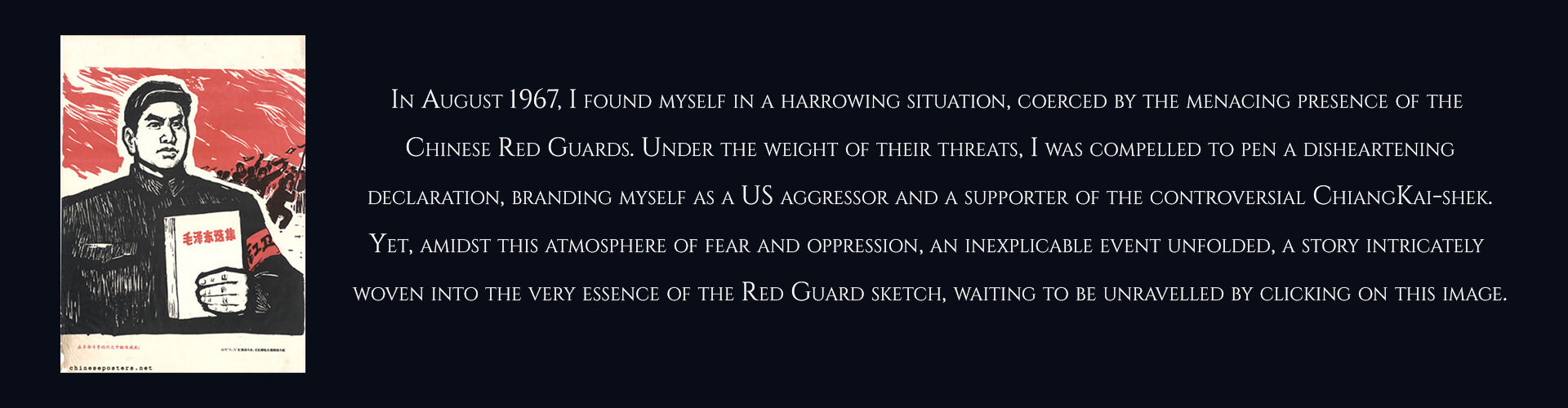
In August 1967, I found myself in a situation so surreal and perilous that it has remained vivid throughout my life. I was aboard a cargo ship in China, under constant observation by Red Guards positioned around the vessel. They were stationed about thirty paces apart and remained on duty day and night.
After being pressured into writing a confession describing myself as a United States aggressor and supporter of Chiang Kai-shek, the second steward told me that I might receive a response to a letter within two days. The response, he said, would come from the head of the Red Guards.
He quietly suggested that I write to my parents.
I followed his advice and wrote 22 foolscap pages. It was not an ordinary letter. I believed I might not survive the week, and I wanted my parents to know who I was in case I never returned home.
I told them that the woman they believed was my landlady was, in fact, my lover. She was 42; I was 18. She had been an important source of stability in my life between 1963 and 1967. I also wrote about life at sea, the loneliness, the confusion, and the fear surrounding my detention.
Writing the letter gave me a way to speak honestly at a time when I had been forced to make a statement I did not believe represented the truth.
A Tray of Leftovers and a Silent Exchange
As ship’s cook and duty mess-room steward, I saw the conditions around us at close range. The crew ate on deck, sometimes balancing plates on handrails. We were transporting grain to China for humanitarian purposes, yet food was routinely discarded while people nearby appeared to be suffering from severe deprivation.
Half-eaten sausages, steaks, and baked potatoes were thrown into the sea. There were no seagulls. I saw no fish. The absence of wildlife was itself a reminder of how severe the conditions appeared to be. Hunger was not an abstract political concept. It was visible in the faces and behaviour of the people watching us eat.
After my arrest, I was placed under what I understood to be house arrest aboard the ship. On one occasion, I filled a small metal tray with edible leftovers, food that otherwise would have gone into the stockpotand placed it on a bench on deck. I patted my stomach to suggest that I had already eaten and then walked away.
Approximately ten minutes later, the tray had been emptied.
At the next meal, I repeated the gesture, leaving enough food for perhaps three or four Red Guards. I returned later to find the tray empty. I continued doing this for another two days while waiting for a response to my letter.
During that period, the Red Guard who had previously woken me every hour stopped doing so. The atmosphere remained tense, but the immediate pressure appeared to lessen.
I cannot know why. The forced confession did not protect me. I do not know whether the letter influenced anyone, whether anyone received instructions, or whether the change was simply coincidental. Perhaps it was luck. Perhaps the food mattered. Perhaps a small act of compassion created a moment of recognition between people trapped on opposite sides of a political crisis.
All I know is that I offered food without negotiation or expectation. It was a silent gesture that conveyed something simple:
I see you. I know you are hungry. I know you are human.
I have never claimed that this gesture alone explains what happened next. But it remains one of the clearest memories of that period, and one of the few moments in which fear gave way, however briefly, to human connection.
The People's Republic of China
Murdered for Mao: The killings China ‘forgot’
In essence, the Australian government traded the lives of its soldiers engaged in the conflict in North Vietnam against the desperate need to provide sustenance for an entire nation teetering on the brink of starvation.
Footnotes 83, 84 and 169 → in a paper submitted by Tianxiao Zhu to - The Faculty of the University of Minnesota titled Secret Trails: FOOD AND TRADE IN LATE MAOIST CHINA, 1960-1978, etc → Requirements For The Degree Of Doctor Of Philosophy - Christopher M Isett June 2021
Tianxiao Zhu's Footnotes 83, 84, 169:
In September 1967, a group of British merchant seamen quit their ship, the Hope Peak, in Sydney and flew back to London. They told the press in London that they quit the job because of the humiliating experiences to which they were subjected while in Chinese ports. They also claimed that grain shipped from Australia to China was being sent straight on to North Vietnam. One of them said, “I have watched grain going off our ship on conveyor belts and straight into bags stamped North Vietnam. Our ship was being used to take grain from Australia to feed the North Vietnamese. It’s disgusting.”
84. The Minister of Trade and Industry received an inquiry about the truth of the story in Parliament, to which the Minister pointed out that when they left Australia, the seamen only told the Australian press that they suffered such intolerable maltreatment in various Chinese ports that they were fearful about going back. But after they arrived in London, Vietnam was added to their story. Thus the Minister claimed that he did not know the facts and did not want to challenge this story, but it seemed to him that their claims about Vietnam seemed to be an “afterthought.”
169. "...In Vancouver, nine sailors refused to work on a grain ship headed to China: two of them eventually returned to work, and the others were arrested. Just when the ship was about to sail, seven more left the ship but three of them later returned to work. In Sydney, six Canadian sailors left their ship; they resigned and asked to be paid, but the Australian immigration office repatriated them. At that time, a grain ship usually had crew members of about 40 people. A British ship lost the Chief Officer and sixteen seamen, who told journalists that if the ship were going to the communist countries, they would rather go to jail than work on the ship."
The Canadian Government and Its Moral Code of Ethics
By hovering your mouse over the Canadian flag image below, you can also learn about the strong ethical principles upheld by Canadian seamen. Despite facing significant challenges, they believed that sending wheat to Communist China, especially when that wheat was being redeployed to North Vietnam, a country at war with Australia, New Zealand, and the USA, where hundreds of troops were being killed or maimed, was immoral and unethical, and therefore should not have been continued.
Yet the Australian Government made a conscious decision to maintain its trade relations with Communist China, despite knowing that a significant portion of Australia’s wheat was being diverted to North Vietnam. This wheat was not merely a trade commodity; it had the potential to sustain North Vietnamese soldiers who were directly engaged in combat against Australia and its allies during the conflict. The ramifications of this trade raised serious ethical questions about supporting a nation that opposed Australian, New Zealand, and US forces.
Examining this wheat agreement with the People's Republic of China, made during the Holt government in the mid‑1960s, is essential. This controversial deal had significant implications, but a government campaign obscured them by discrediting British and Canadian merchant seamen, including me. These brave individuals tried every conceivable legal way to expose this illicit diversion of wheat to North Vietnam.
All events on this website are backed by the original documents, every exhibit, every file, every damning scrap of evidence. Click the links below to open the PDFs instantly. Follow the file numbers. Each section exposes another layer of the machinery that was supposed to deliver justice but instead protected corruption.
The 26 bracket‑numbered exhibits below each contain hundreds of documents. Evidence File-1 and Evidence-File-2 alone authenticate 156 separate mini‑stories — everyone a shard of the same rotten truth. Very few websites dare to expose corruption across multiple arbitrations with this level of transparency. Fewer still provide thousands of numbered exhibits for the public to download at no cost.
Keep reading. The unbelievable story begins the moment the exhibit numbers end, and the treachery speaks for itself.
Example 2: File 34-C -
AS-CAV Exhibit 1 to 47 – AS-CAV Exhibit 48-A to 91 – AS-CAV Exhibit 92 to 127 – AS-CAV Exhibit 128 to 180 – AS-CAV Exhibit 181 to 233 – AS CAV Exhibit 234 to 281 – AS-CAV Exhibit 282 to 323 – AS-CAV Exhibit 324-a to 420 – AS-CAV Exhibit 421 to 469 – AS-CAV Exhibit 470 to 486 – AS-CAV Exhibit 488-a to 494-e – AS-CAV Exhibits 495 to 541 – AS-CAV Exhibits 542-a to 588 – AS-CAV Exhibits 589 to 647 – AS-CAV Exhibits 648-a to 700 – AS-CAV Exhibit 765-A to 789 – AS-CAV Exhibit 790 to 818 – AS-CAV Exhibit 819 to 843 AS-CAV 923 to 946 – AS-CAV Exhibit 1150 to 1169 – AS-CAV 1103 to 1132 – AS-CAV Exhibit 1002 to 1019 – AS-CAV Exhibit 996 to 1001 – GS-CAV Exhibit 1 to 88 – GS-CAV Exhibit 89 to 154-b – GS-CAV Exhibit 155 to 215 – GS-CAV Exhibit 216 to 257 – GS-CAV Exhibit 258 to 323 GS-CAV Exhibit 410-a to 447 – GS-CAV Exhibit 448 to 458 – GS-CAV Exhibit 459 to 489 – GS-CAV Exhibit 490 to 521 – GS-CAV 522 to 580 – GS-CAV Exhibit 581 to 609

Absent Justice Part 1, Part 2 and Part 3
Government Corruption. Corruption in the public service, where misleading and deceptive conduct has spuriously over more than two decades perverted the course of justice.

Telstra's Falsified BCI Report 2
Corruption, misleading and deceptive conduct plagued the COT with the government's sanctions, which endorsed the arbitrations. Learn the names of those who participated in these horrendous crimes that equally corrupted arbitrators who ignored this conduct.

Telstra's Falsified SVT Report
Corruption, misleading and deceptive conduct plagued the COT with the government's sanctions, which endorsed the arbitrations. Learn the names of those who participated in these horrendous crimes that equally corrupted arbitrators who covered up these atrocities

Senate Evidence
The criminal delinquency of those involved in the COT Cases corrupted arbitrations continued to practive their evil and crooked style of justice on other citizens who, like the Casualties of Telstra have had their lives ruined.

An Injustice to the remaining 16 Australian citizens
This type of skulduggery is treachery, a Judas kiss with dirty dealing and betrayal. This is dirty pool and crookedness and dishonest. This conduct fester’s corruption. It is as bad, if not worse than double-dealing and cheating those who trust the ground you walk on. Sheer Evil.<

China-Flash-Back-AFP Investigation -2
Read about the corruption within the government bureaucracy that is plaguing COT arbitrations. Learn who committed these horrendous crimes that equally corrupted lawyers and crooked arbitrators who covered up these crimes.
Telecommunications Industry Ombudsman
Corruption in government, including non-government self-regulators, undermines the credibility of that government. It erodes the trust of its citizens.

C A V Part 1, 2 and 3
Sadly, corruption and collusive practices are rife in the Australian ‘Establishment’ and this terrible situation prevents us from telling our story in a brief way. We had no alternative but to produce it the way we have here.
Blowing The Whistle
Blowing The Whistle was established on absentjustice.com to show our readers that the COT Cases arbitrations were nothing more than a sham set up to protect a government-owned asset.
Kangaroo Court - Absent Justice
From financial devastation to emotional pain, the dangers of identity theft are considerable.

Spurious and Unscrupulous Conduct
The first remedy pursued
The website that triggered the deeper exploration into the world of political corruption stands shoulder to shoulder with any true crime
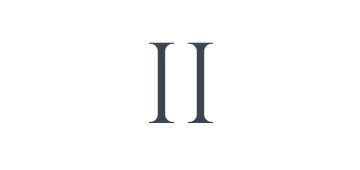
The second remedy pursued
Checkout our bribery and corruption part & part and learn how deception undermines the credibility of those businesses who have been subjected to criminal legal abuse.
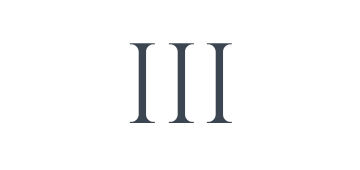
The third remedy pursued
Bribery and Corruption have many evil faces and ‘grey’ areas within Australia’s politically-corrupt government. Criminal wrongdoings interact with the private sector: the revolving door of deception.

The fourth remedy pursued
Bribery and Corruption have many evil faces and ‘grey’ areas within Australia’s politically-corrupt government. Criminal wrongdoings interact with the private sector: the revolving door of deception. Corrupt practices.

The fifth remedy pursued
Corruption in government, including non-government self-regulators, undermines the credibility of that government. It erodes the trust of its citizens, who are left without guidance. Bribery and Corruption is cancer that destroys economic growth.
The sixth remedy pursued
Corruption in government, including non-government self-regulators, undermines the credibility of that government. It erodes the trust of its citizens, who are left without guidance. Bribery and Corruption is cancer that destroys economic growth.
The seventh remedy pursued
Corruption in government, including non-government self-regulators, undermines the credibility of that government. It erodes the trust of its citizens, who are left without guidance. Bribery and Corruption is cancer that destroys economic growth.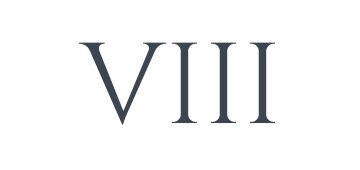
The eighth remedy pursued
Legal abuse, or legal bullying, happens when someone uses the law or legal threats to control and scare you. Using this type of corrupt and deceptive conduct is evil and unscrupulous.
The ninth remedy pursued
Legal abuse, or legal bullying, happens when someone uses the law or legal threats to control and scare you. Using this type of corrupt and deceptive conduct is evil and unscrupulous
The tenth remedy pursued
Legal abuse, or legal bullying, happens when someone uses the law or legal threats to control and scare you. My corruption and misleading and deceptive conduct evidence provided to Consumer Affairs Victoria was not acted upon.
The eleventh remedy pursued
Check out our website, which shows evil wrongdoing, such as using false reports to the judge and arbitrator to stop you from getting legal advice, interfering with or destroying legal documents that belonged to you, and destroying your documents.