KPMG - Misleading-Deceptive-Conduct
Shameful, hideous, and treacherous are just a few words that describe these lawbreakers. Terms such as "government corruption," "bribery," and "kickbacks" have become all too prevalent in arbitration and mediation in Australia.
The following YouTube video, despite its poor quality (see https://www.youtube.com/watch?v=ISdNMcM03DI&t=309s), illustrates the trauma experienced by the nine COT Cases who were interviewed. These individuals were interviewed after spending hundreds of thousands of dollars in arbitration fees to have Telstra address their ongoing telephone problems as part of the government-endorsed arbitration and mediation processes. This endorsement served as an incentive for us to agree to a system that the Telstra board and middle management knew could not meet the commitments we made when we signed our various agreements.
⛩️The Hong Kong Arbitration Hit
Is what happened in Australia during the Casualties of Telstra government‑endorsed arbitrations, confirmed in black and white on the absentjustice.com homepage, now being replayed in Hong Kong?
Because the same Australian Arbitration Project Manager who allowed those injustices to happen is now operating an arbitration centre in Hong Kong. And this isn’t some junior clerk who wandered off the street. This is a one‑time partner of KPMG, a man who sat inside one of the world’s most powerful accounting houses before stepping into the shadows of the arbitration world.
So the question becomes brutal in its simplicity:
Is Hong Kong now getting the same treatment Australia got, the same cooked‑ledger justice, the same back‑room deals, the same arbitration process that looked more like a mob‑run extortion racket than a legal remedy?
Because what happened in Australia wasn’t arbitration. It was a hit job dressed up as due process. A government‑endorsed shakedown. A system where evidence vanished, documents were shredded, and the people running the operation walked away untouched, protected, insulated, and rewarded.
And now one of the key operators from that Australian operation, a former KPMG partner, is running an arbitration centre in Hong Kong, as if he has simply expanded the family business offshore.
If the same man who oversaw the Australian injustices is now calling the shots in Hong Kong, then the question isn’t whether the pattern has repeated itself in Mr Rundell's Hong Kong Arbitration Centre.
 Viewing "The first remedy pursued" makes one thing unmistakably clear: I believe I do have a duty of care to expose the unethical conduct of John Rundell during my arbitration, including his decision to knowingly misinform the Telecommunications Industry Ombudsman, John Pinnock, while Mr Rundell was a partner at KPMG. The documents, letters, and exhibits linked in that section speak for themselves and show why this conduct cannot remain hidden.
The real question is:
How far does this arbitration racket reach, and how many jurisdictions does this “justice‑for‑sale” family think it can control?
An Internal Accounting Hit Job Disguised as Due Process
All this information was supplied to the TIO, Warwick Smith. But behind the scenes, secret negotiations between Warwick Smith and Telstra’s Arbitration Officer, Steve Black, were being funnelled straight to the office of John Rundell — the man who controlled what the arbitrator saw and what got buried in the accounting graveyard, as Chapter 5 Fraudulent Conduct (Duplicate 2) shows. Rundell and his staff had already been quietly exonerated from all liability after the $250,000 liability caps — a classic protection racket: immunity first, truth never.
Mr Rundell had not yet become a partner of KPMG, although he was a partner at the time he misinformed the TIO about my arbitration, a man sitting in the shadows of the ledger room, deciding which numbers lived and which numbers got whacked.
The KPMG image below is used here to support the self-funded independent newspaper,  , "The Guardian", which requires public donations to continue reporting on matters of public interest.

Dive into the stagnant cesspool of a corrupt scheme involving Dr Gordon Hughes, the COT arbitrator who is now Principal Lawyer of Davies Collison Cave's (https://shorturl.at/L4tbp), and John Rundell, a former partner at KPMG and the second appointed Australian Telecommunications Industry Ombudsman, John Pinnock. This sinister trio, alongside Dr Hughes’ unsuspecting wife, who may remain oblivious even in 2026 to the vile exploitation of her good name, colluded to obliterate my credibility. Their underhanded machinations compelled Lauire James, the 1996 President of the Institute of Arbitrators Australia, to abandon his inquiries into my legitimate claims against these wicked individuals (see The first remedy pursued).
Watch “KPMG faces day of reckoning over audit scandal and whistleblower claims”.
The fact that John Rundell admitted in writing to John Pinnock, the Telecommunications Industry Ombudsman 13 February 1996 (see Exhibit 45‑E → File Open letter File No/45-E), while Rundell was a partner at KPMG, during an official hearing conducted by Laurie James, President of the Institute of Arbitrators Australia, that not all of my financial losses were taken into account in the final arbitration report on my business losses, is scandalous.
This written admission alone should have been enough to prompt questions of Dr Gordon Hughes as to why the most lucrative side of my business, the “Over Forties Single Club Country Get‑Aways”, was not taken into account by either Dr Hughes or John Rundell when the damages award was made. It was on the advice of the Australian Federal Police that I masked the names and addresses of the Single Club patrons while the AFP investigated why Telstra‑related arbitration documents concerning my business affairs showed that Telstra had been recording my clients’ names and addresses on documents faxed to my office by those patrons.
The following 93 questions were posed to me by the Australian Federal Police (AFP), along with my responses, as detailed in Australian Federal Police Investigation File No/1. My answers reveal a disturbing truth: Telstra issued direct threats against me for daring to assist the AFP in its investigations into the interception of my phone conversations and the illicit hacking of documents, in some cases related to my "Over-Forties-Single Club" patrons, before and during my arbitration.
As anyone scrolling further down the absentjustice.com home page can see, the two so‑called “independent” technical reports funnelled through John Rundell’s office were a matched pair — right down to the same 23 sets of findings. But here’s where the hit job shows its hand.
The copy given to me during arbitration, the one I was expected to challenge, showed every one of my claim documents listed in the index. On paper, it looked like everything I submitted had been assessed.
But the twin report, the one the arbitrator actually relied on, had more than 2,300 of my submitted points quietly erased from the index. Gone. Vanished. As if they had never existed.
The fact that my arbitration forensic accountant, Derek Ryan of DMR Corporate, alerted both the Shadow Minister for Communications and John Pinnock to two letters corroborating what Rundell, now a partner of KPMG, had told him, namely that his report on my losses was still incomplete when it was submitted to arbitration, is precisely the type of conduct now being questioned in the government’s 2026 investigations into KPMG.
Please be advised of the following:
John Rundell's assertion in his communication to John Pinnock (see Open letter File No/45-E) that the Brighton CIB Department of the Brighton police force intended to interview me regarding property damage at his residence was entirely false. This fabrication was orchestrated with the aim of halting Laurie James, President of the Institute of Arbitrator Australia, from further pursuing investigations into my arbitration claims.
Mr. Neil Jepson, Barrister for the Major Fraud Group (Victoria Police), conducted an inquiry into this claim and determined that I had never been a suspect of causing damage to Mr. Rundell's property by the Brighton CIB police. Furthermore, John Pinnock has not mandated Mr. Rundell to issue a written apology to Laurie James for utilizing Mr. Rundell's letter as an attachment to his correspondence with Laurie James dated 17 February 1996 (See Prologue Evidence File No/8-E).
At this time Mr Rundell was a partner of KPMG, which gave his testmony.
False statements made by individuals such as Dr. Gordon Hughes and John Rundell have had a detrimental impact on both my life and that of my partner, Cathy.
Corruption in Arbitration
On 6 December 1995, Derek Ryan, my arbitration accountant, wrote to the Shadow Minister for Communications, Senator Richard Alston, stating:
“Over the last 2 years I have acted as an independent accountant for Alan Smith and I prepared the independent assessment of his losses and damages which formed part of his submission to the arbitrator, Dr G Hughes.
“In response to accounting documents and evidence submitted to the arbitrator, he appointed Ferrier Hodgson Corporate Advisory (Vic) Pty Ltd.(‘FHCA’) to support him in assessing the losses and damages.
“The FHCA report was inaccurate and incomplete. I have since been advised by a staff member of FHCA that a large amount of information was excluded from their final report at the request of the arbitrator. This has left the report in an incomplete state and it is impossible for anyone to re-calculate or understand how the FHCA loss figures were determined. This effectively meant that it was impossible to challenge the assumptions, calculations and the time periods used in the FHCA report.” (See Open letter File No/45-E)
On 22 December 1995, Derek Ryan wrote to TIO John Pinnock, noting:
“The Ferrier Hodgson Corporate Advisory (Vic) Pty Ltd (‘FHCA’) report was dated 3 May 1995 and I received a copy of the report on 5 May. After discussions with Alan Smith it was decided that I should reply to the report as soon as possible.
“I worked all day Saturday and Sunday with Alan Smith trying to interpret the FHCA report. After this work I considered that the report was incomplete as the calculations of the FHCA loss figures were not included in their report. …
“In 17 May I telephoned John Rundell and he stated that he was unable to discuss anything with me until the appeal period had expired. … He then stated that he understood my problems and that FHCA had excluded a large amount of information from their final report at the request of the arbitrator.” (See Open letter File No/45-E)
Please view the ANN GARMS video, who is now deceased.
In an act of extraordinary courage, Ann recorded the following YouTube video documenting the unbearable burden she had carried—a burden created by Telstra, the arbitrator, and all those who played a role in the cover‑up that has harmed more than a dozen COT cases. This video stands as a stark testament to what she endured. Many of us were drawn into government‑endorsed arbitration and mediation processes that proved to be nothing more than a carefully constructed trap. Tragically, Ann passed away shortly after releasing her video, leaving behind a legacy of truth‑telling in the face of systemic wrongdoing.
The YouTube video below demonstrates how effectively Telstra has avoided scrutiny. Just days before this video was made, and shortly before Ann passed away, she said to me:
Alan, sure, I finally received compensation for what these bastards did to us, and most would think, 'Why is she still angry? Why does she supposedly have sleepless nights?
She said this, knowing that I too had been a victim of the lies attributed to Dr Gordon Hughes's wife—if she ever made those statements at all. The question remains whether Mrs Hughes actually told her husband that I telephoned her at 2:00 AM, or whether the entire story was concocted by Dr Hughes and John Pinnock, the second-appointed Australian Telecommunications Industry Ombudsman.
Pinnock wrote to Laurie James, President of the Institute of Arbitrators Australia, claiming that I had written to him, admitting that I had made that 2:00 AM call. No such letter was ever written. No such conversation took place between Mrs Hughes and me at 2:00 AM →The first remedy pursued
John Pinnock's lies stopped the Institute of Arbitrators Australia from proceeding with its pending investigation into my allegations of Dr Hughes's gross misconduct—misconduct that impacted Ann's arbitration, my arbitration, and the other arbitrations central to this story.
I do not expect every reader of absentjustice.com to watch this video in full, nor the video attached to Price Waterhouse Coopers, Deloitte, KPMG, where eight other COT Cases tell their story on national television. But these videos—along with my own three-minute video → My YouTube Video—establish one thing beyond doubt:
Should the Australian Government, a representative from another country, or someone passionate about creating a true-to-life drama engage a clinical psychologist to analyse these three videos alongside the story you are about to read, they would recognise that the nine individuals featured in these media exposés are indeed telling their truth. They have profoundly lived the experiences portrayed in these videos and stories.
It was also essential to raise Ann Garms's letter here because Wayne Goss (Chair of Deloitte), who Ann referred to, had also been Premier of Queensland Therefore, Ann's statement that told her that during our arbitrations, Gaslighting methods were used against us fits in with the Gaslighting character assassination used against me in 1996, to stop Laurie James, the President of the Institute of Arbitrators Australia, from investigating my claims concerning the unethical way in which the four COT arbitrations had been conducted.
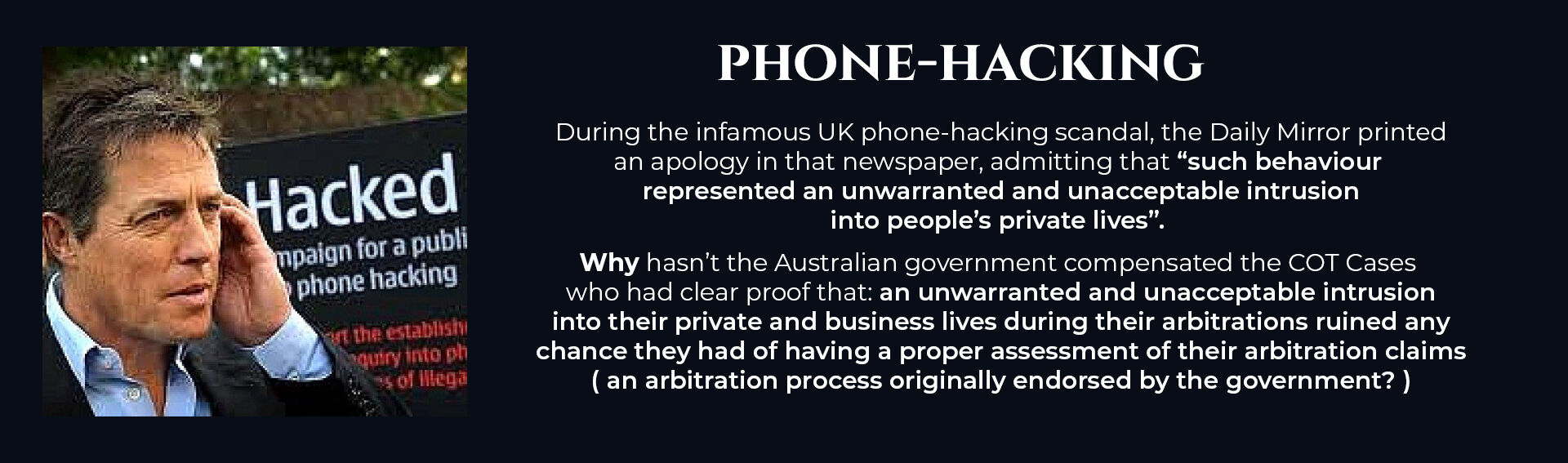
In the Sunday Herald Sun, dated January 24, 2026, British actor Liz Hurley revealed the harrowing impact of the phone-hacking scandal that ensnared her alongside Hugh Grant. Both actors find themselves grappling with the fallout of their conversations being surreptitiously monitored for an extended period during the infamous News of the World scandal orchestrated by Rupert Murdoch. The same issue reported that Prince Harry is haunted by trauma-related flashbacks, tormented by the knowledge that his own private conversations were similarly compromised.
During our COT arbitrations, the Australian Federal Police met with Ann Garms and me, revealing a shocking betrayal: Telstra had confessed to bugging our phone services without our consent, harking back to the government’s ominous warnings in 1994. This egregious invasion of privacy has condemned Ann Garms to a life of torment, rendering her unable to lead anything resembling a normal existence, even after receiving punitive damages. The spectre of constant electronic surveillance not only stirs anxiety but wreaks havoc on our mental health, leaving us in a state of paranoia about whether we are still being watched and whether our faxes and emails are still subject to Telstra's intrusive scrutiny.
The COT Cases, like Ann and me, are trapped in a nightmarish reality, haunted by the pervasive corruption of an entity that has thus far evaded accountability for its treacherous actions. The shadow of Telstra’s violations looms large, making it clear that we can never truly escape the darkness they have cast over our lives.
“We canvassed examples, which we are advised are a representative group, of this phenomenon .“They show that• the header strip of various faxes is being altered• the header strip of various faxes was changed or semi‑overwritten• in all cases the replacement header type is the same• the sending parties all have a common interest and that is COT• some faxes have originated from organisations such as the Commonwealth Ombudsman office• the modified typeface of the header could not have been generated by the large number of machines canvassed, making it foreign to any of the sending services.”
“I still stand by my statutory declaration that I was able to identify that the incoming faxes provided to me for review had at some stage been received by a secondary fax machine and then retransmitted. This was done by identifying the dual time stamps on the faxes provided.” (
• How could two separate investigations into Telstra for alleged unlawful conduct be conducted simultaneously by two different bodies—an arbitrator and the AFP? We have found no comparable situation in any other Western democracy.• While each of us struggled to keep our small businesses afloat, how were we expected to prepare complex submissions for the arbitrator while also assisting the AFP with their investigations?• Who authorised this situation to continue?(see ) Record this fact.

The Weight of Treachery
My 3 February 1994 letter to Michael Lee, Minister for Communications (see Hacking-Julian Assange File No/27-A) and a subsequent letter from Fay Holthuyzen, assistant to the minister (see Hacking-Julian Assange File No/27-B), to Telstra’s corporate secretary, show that I was concerned that my faxes were being illegally intercepted.
Leading up to the signing of the COT Cases arbitration, on 21 April 1994, AUSTEL wrote to Telstra on 10 February 1994 stating:
“Yesterday we were called upon by officers of the Australian Federal Police in relation to the taping of the telephone services of COT Cases.
“Given the investigation now being conducted by that agency and the responsibilities imposed on AUSTEL by section 47 of the Telecommunications Act 1991, the nine tapes previously supplied by Telecom to AUSTEL were made available for the attention of the Commissioner of Police.” (See Illegal Interception File No/3)
An internal government memo, dated 25 February 1994, confirms that the minister advised me that the Australian Federal Police (AFP) would investigate my allegations of illegal phone/fax interception. (See Hacking-Julian Assange File No/28)
This internal, dated 25 February 1994, is a Government Memo confirming that the then-Minister for Communications and the Arts had written to advise that the Australian Federal Police (AFP) would investigate my allegations of illegal phone/fax interception. (AFP Evidence File No 4)
A System Built on Silence
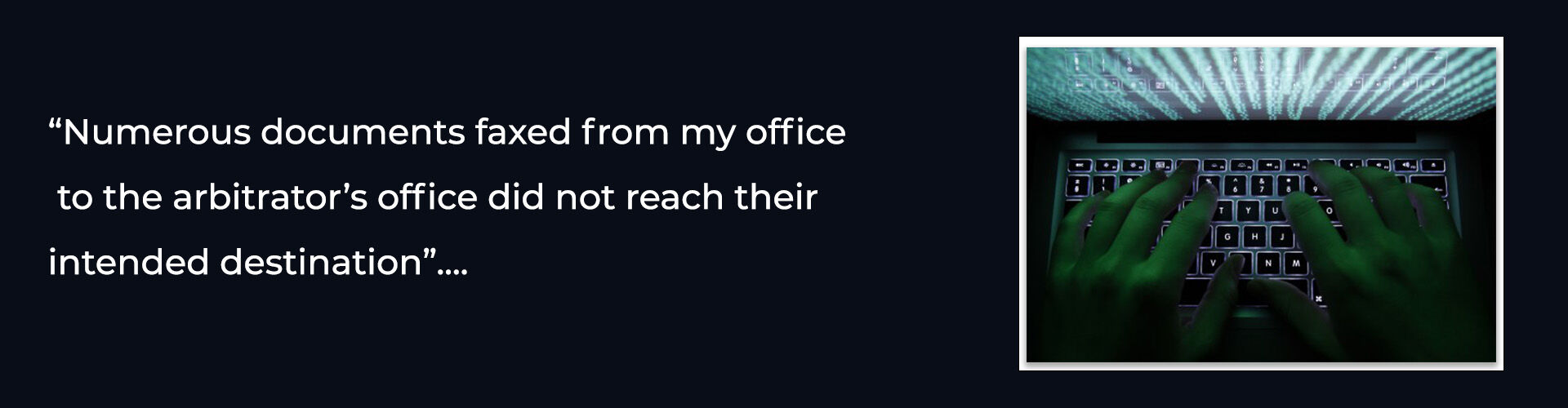
📠 The Vanishing Faxes: A Calculated Disruption
Exhibits 646 and 647 (see ) clearly show that, in writing, Telstra admitted to the Australian Federal Police on 14 April 1994 that my private and business telephone conversations were listened to and recorded over several months, but only when a particular officer was on duty.
This particular Telstra technician, who was then based in Portland, not only monitored my phone conversations but also took the alarming step of sharing my personal and business information with an individual named "Micky." He provided Micky with my phone and fax numbers, which I had used to contact my telephone and fax service provider (please refer to Exhibit 518, FOI folio document K03273 - ).
To this day, this technician has not been held accountable or asked to clarify who authorised him to disclose my sensitive information to "Micky." I am perplexed as to why Dr Gordon Hughes did not pursue any inquiries with Telstra regarding this local technician’s actions. Specifically, why was he permitted to reveal my private and business details without any apparent oversight or justification?
Threats made during my arbitration
On July 4, 1994, amidst the complexities of my arbitration proceedings, I confronted serious threats articulated by Paul Rumble, a Telstra representative on the arbitration defence team. Disturbingly, he had been covertly furnished with some of my interim claims documents by the arbitrator—a breach of protocol that occurred an entire month before the arbitrator was legally obligated to share such information. Given the gravity of the situation, my response needed to be exceptionally meticulous. I invested considerable effort in crafting this detailed letter, carefully selecting every word. In this correspondence, I made it unequivocally clear:
“I gave you my word on Friday night that I would not go running off to the Federal Police etc, I shall honour this statement, and wait for your response to the following questions I ask of Telecom below.” (File 85 - AS-CAV Exhibit 48-A to 91)
When drafting this letter, my determination was unwavering; I had no intention of submitting any additional Freedom of Information (FOI) documents to the Australian Federal Police (AFP). This decision was significantly influenced by a recent, tense phone call I received from Steve Black, another arbitration liaison officer at Telstra. During this conversation, Black issued a stern warning: should I fail to comply with the directions he and Mr Rumble gave, I would jeopardise my access to crucial documents pertaining to ongoing problems I was experiencing with my telephone service.
Page 12 of the AFP transcript of my second interview (Refer to Australian Federal Police Investigation File No/1) shows Questions 54 to 58, the AFP stating:-
“The thing that I’m intrigued by is the statement here that you’ve given Mr Rumble your word that you would not go running off to the Federal Police etcetera.”
Essentially, I understood there were two potential outcomes: either I would obtain documents that could substantiate my claims, or I would be left without any documentation that could affect the arbitrator's decisions in my case.
However, a pivotal development occurred when the AFP returned to Cape Bridgewater on 26 September 1994. During this visit, they began asking probing questions about my correspondence with Paul Rumble, demonstrating a sense of urgency in their inquiries. They indicated that if I chose not to cooperate with their investigation, their focus would shift entirely to the unresolved telephone interception issues central to the COT Cases, which they claimed assisted the AFP in various ways. I was alarmed by these statements and contacted Senator Ron Boswell, National Party 'Whip' in the Senate.
As a result of this situation, I contacted Senator Ron Boswell, who subsequently brought these threats to the attention of the Senate. This statement underscored the serious nature of the claims I was dealing with and the potential ramifications of my interactions with Telstra.
On page 180, ERC&A, from the official Australian Senate Hansard, dated 29 November 1994, reports Senator Ron Boswell asking Telstra’s legal directorate:
“Why did Telecom advise the Commonwealth Ombudsman that Telecom withheld FOI documents from Alan Smith because Alan Smith provided Telecom FOI documents to the Australian Federal Police during their investigation?”
After receiving a hollow response from Telstra, which the senator, the AFP and I all knew was utterly false, the senator states:
“…Why would Telecom withhold vital documents from the AFP? Also, why would Telecom penalise COT members for providing documents to the AFP which substantiate that Telecom had conducted unauthorised interceptions of COT members’ communications and subsequently dealt in the intercepted information by providing that information to Telecom’s external legal advisers and others?” (See Senate Evidence File No 31)
Thus, the threats became a reality. What is so appalling about this withholding of relevant documents is this: no one in the TIO office or the government has ever investigated the disastrous impact of this withholding on my overall submission to the arbitrator. The arbitrator and the government (at the time, Telstra was a government-owned entity) should have initiated an investigation into why an Australian citizen who had assisted the AFP in its investigations into unlawful interception of telephone conversations was so severely disadvantaged in a civil arbitration.
Pages 12 and 13 of the Australian Federal Police Investigation File No/1 transcripts provide a comprehensive account that establishes Paul Rumble as a significant figure linked to the threats I have encountered. This conclusion is based on two critical and interrelated factors that merit further elaboration.
Firstly, Mr Rumble was a senior government lobbyist as well as a Telstra employee who actively obstructed the provision of essential arbitration discovery documents, which the government was legally obligated to provide under the Freedom of Information Act. This obligation was contingent on my signing an agreement to participate in a government-endorsed arbitration process. By imposing this condition, Mr Rumble undermined a legally established protocol, effectively manipulating the process for his benefit and jeopardising my legal rights.
Secondly, I discovered that Mr Rumble had a substantial influence over the arbitrator, leading to the unauthorised early release of my arbitration interim claim materials. This premature revelation directly conflicted with the timeline stipulated in the arbitration agreement that Telstra and I had formally signed. Specifically, Telstra gained access to my interim claim document 5 months earlier than permitted under the agreed terms. This breach of protocol violated the integrity of the arbitration process and gave Telstra an unfair advantage in its response to my claims.
According to the rules governing our arbitration process, Telstra was given one month to respond to my final claim once it had been submitted in writing. Furthermore, the arbitrator was only authorised to release my final claim to Telstra once it was officially confirmed to be complete. The five-month delay in submitting my claim in November 1994 was primarily attributable to Mr Rumble's deliberate withholding of critical technical information.
(Duplicate 1)
I went to sea with my head full of foolish dreams. I pictured moonlit beaches, palm trees whispering in the breeze, and rugged sailors roaring sea shanties with half their teeth missing and twice the charm
Chapter 1 - The Collusion Continues
The website that triggered the more profound exploration into political corruption stands shoulder to shoulder with any actual crime. Living with unconscionable Conduct:&

Chapter 2 - Inaccurate and Incomplete
Goverement corruption and horrendous and horrifying crimes were committed against ordinary small business operators by the Telstra Corporation, Australia's largest telecommunications giant.
Chapter 3 - The Sixth Damning Letter

Chapter 4 - The Seventh Damning Letter
Corruption, misleading and deceptive conduct in government, including non-government self-regulators, undermines government.

Chapter 5 - The Eighth Damning Letter
Corruption, misleading and deceptive conduct in government, including non-government self-regulators, undermines government.
Evidence File-1
Explore the disturbing realm of horrendous crimes committed by unscrupulous criminals with little regard for the law or morality.John Rundell
My YouTube Video
Bribery and Corruption happens in the shadows, often with the help of professional enablers such as bankers, lawyers, accountants and real estate agents, opaque financial systems and anonymous shell companies.Organized Crime and Corruption - Absent Justice
Learn about horrendous crimes and unscrupulous criminals, corrupt politicians and the lawyers who control the legal profession in Australia. Shameful, hideous, and treacherous are just a few words that describe these lawbreakers.