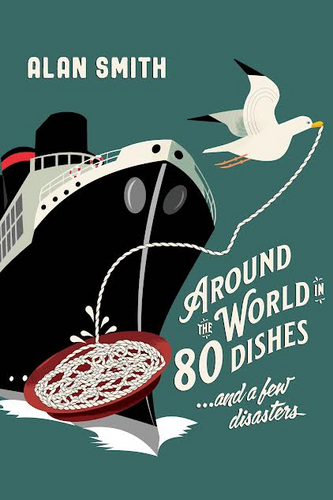
INTRODUCTION — Life at Sea: The Truth Behind the Romance
I went to sea with my head full of foolish dreams. I imagined moonlit beaches, nightingales singing from palm trees, and rugged sailors belting out sea shanties with half their teeth missing and twice the charm. I thought I’d be stepping into a grand adventure—sun‑kissed, heroic, and maybe even a little poetic.
What I got instead was a galley the size of a coffin and a crew of madams who could have run the Royal Opera House with their demands.
My first voyage cured me of romance faster than a bucket of cold seawater down the back. The sea didn’t care about my daydreams. It heaved and rolled and slapped the hull like it was trying to shake us loose. And inside that steel box, I was juggling pots, pans, and personalities that made the weather look tame.
There I was, a greenhorn seaman, elbow‑deep in garlic and chaos, cooking for a troupe of diva‑madams who treated me like their personal chef. If I’d worn a frilly apron, I could’ve starred in The Galley and the Glamour Girls.
But the sea has a way of toughening you. Between the tantrums, the rolling decks, and the pots that slid across the stove every time the ship lurched, I learned to survive. I learned to chop onions fast enough to hide the tears. I learned to brace my legs against the swell while stirring a pot big enough to drown in. And I learned that sometimes the greatest adventures happen in the places you least expect—like a galley that smelled of onions, diesel, and desperation.
The 1960s–80s: A Different World Entirely
Back then, gay men at sea lived in the shadows—mocked, misunderstood, and only “interesting” when a lonely sailor had been too long away from home. I learned early to defend myself. A long‑neck brandy bottle with a manila rope through the neck became my makeshift handcuff and my best friend. Admirers sometimes mistook my steward’s uniform for an invitation. It wasn’t.
But here’s the truth most people never hear:
Some of the finest seafarers I ever sailed with were gay men. Loyal. Fierce. Hilarious. And when trouble brewed—whether in a bar ashore or on a dark deck at sea—they were the ones you wanted beside you.
They could fight like alley cats. Pick one of our crew, and you’d better be ready for flying hairpins.
Europe, Nightclubs, and the Brotherhood of the Sea
After running from New Zealand to Europe—our holds packed with butter and wool—we’d step ashore in Hamburg, Bremerhaven, Rotterdam, Dunkirk, Antwerp, and London. The nights were wild. Music spilled from taverns. Laughter rolled across cobblestones. And my gay shipmates lit up every bar we entered.
They played pianos, strummed guitars, sang like angels or devils, depending on the hour, and earned us free beer with their performances. They made the loneliness bearable. They made the world feel less cold.
The Harshness No One Talks About
But life at sea wasn’t all music and mischief.
There were nights when the wind screamed like a living thing, and the ship rolled so hard you had to lash yourself to the rail to stay aboard. I remember standing in a gale, a rope looped over and under my wrist, hauling in a heaving line with another crewman. I was the cook—but at sea, titles mean nothing when the ocean decides to test you.
That’s the truth of it:
At sea, you are a team, or you are nothing.
On one ship alone, we had two Irishmen, two West Africans, two Dutchmen, four British trawlermen, a Welshman, a Chinaman, two Romanians, and one gay man. It didn’t matter. Not one bit. When the sea rose, we rose together.
Dockside Lessons: No Place for the Faint‑Hearted
Life ashore in the 1960s was no gentler than life at sea. The ports were alive with noise—seagulls screaming, winches clattering, ships groaning under their loads. And the bars along the waterfront were their own battlegrounds.
One night, in a smoky, rowdy bar, a young lad barely out of childhood found himself cornered by a local tough who enjoyed picking on fresh faces. There were no “Mr Nice Guys” in those places. You either stood up or you were trampled.
A seasoned sailor saw what was happening and stepped in. The air thickened. Trouble came fast. And by the end of it, twenty‑six stitches were needed to close the night’s lesson.
That was the waterfront: raw, unforgiving, and honest in a way the world rarely is now. You learned to look after each other. You learned that mercy was a luxury. And you learned that loyalty mattered more than anything.
What the Sea Really Taught Me
Life aboard those ships was a balancing act between laughter and hardship. Between the madness of the galley and the terror of a storm. Between loneliness and the strange, fierce brotherhood that only sailors understand.
It taught me that respect is earned, not assumed.
That difference is strength, not weakness.
And that the sea—like life—doesn’t care who you are, only how you stand your ground.
So read on.
Because the story you’re about to enter isn’t polished or pretty.
It’s real.
It’s rough.
It’s funny, brutal, and unforgettable.
It’s life at sea.